

At the 58th ASEAN Foreign Ministers’ Meeting (AMM) on July 9, Prime Minister Datuk Seri Anwar Ibrahim issued a strong call for Anwar ASEAN unity. He urged foreign and economic ministers across the region to act in unison as global power rivalries increasingly shape trade policies and economic decisions.
Anwar highlighted how trade tools—such as tariffs and export controls—have shifted from growth drivers to instruments of political coercion. He warned that ASEAN must respond to these changes with clarity, cohesion, and long-term strategy. Ministers, he argued, must not work in isolation. Instead, they should synchronize their efforts to protect regional interests and ensure sustainable development.
Countries no longer use tariffs just to protect industries. Many now deploy them to isolate rivals or pressure smaller economies. Anwar urged ASEAN leaders to strengthen internal collaboration to shield their nations from such tactics. His speech, given just hours after returning from a diplomatic tour that included Brazil, Italy, and France, underscored his urgency.
He reminded attendees that ASEAN must avoid becoming a pawn in global power struggles. Rather than allowing external actors to shape its direction, the region should chart its own course. Anwar emphasized that decisions affecting Southeast Asia must come from within, not from foreign capitals.
To build resilience, Anwar encouraged ASEAN states to trade and invest more with each other. He stressed that stronger internal economic ties reduce dependence on global powers and protect the region from external shocks. This approach, he said, offers a long-term buffer against geopolitical disruption.
He called for ASEAN to transform its unity from slogans into action. Institutions, policy structures, and economic frameworks must reflect this alignment. Without it, the region remains vulnerable to manipulation and division.
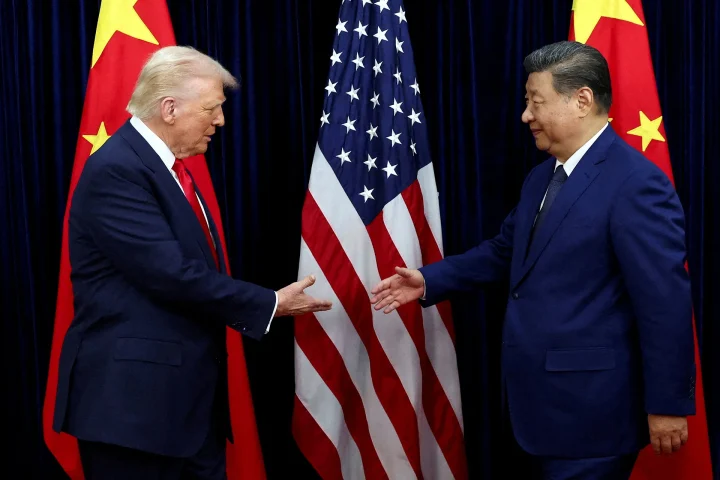
Anwar’s remarks came in the wake of a major announcement by U.S. President Donald Trump, who imposed heavy tariffs on multiple countries. Malaysia, Japan, South Korea, Tunisia, and Kazakhstan now face a 25% tariff. Other affected nations include Indonesia, Serbia, Bangladesh, and Thailand, with rates ranging from 30% to 40%. The move further illustrated how rapidly international trade can shift based on political motives.
These developments, Anwar noted, reinforced his call for collective action. By staying united, ASEAN members can avoid being targeted or divided by aggressive economic policies. Fragmentation, he warned, only empowers those seeking to dominate weaker states.
He also reaffirmed that ASEAN cannot remain silent or passive. “We will not be spoken for in absentia,” Anwar declared. His words served as a reminder that ASEAN must actively shape its own destiny through purposeful leadership and regional solidarity.
As U.S. Secretary of State Marco Rubio prepares to attend the AMM in Kuala Lumpur on July 10, Anwar’s message sets a clear tone. ASEAN’s unity must translate into action, diplomacy, and policy. It cannot rely on declarations alone.
Ultimately, Anwar’s call for Anwar ASEAN unity stands as a powerful response to a shifting global order. He urged the region to think boldly, act decisively, and never surrender its autonomy to external pressure.