
Inflation in 2025 reached the highest level in three years, primarily driven by rising food prices and soaring gold costs. According to a press conference by Statistics Indonesia (BPS) official Pudji Ismartini, the annual consumer price index (CPI) for December stood at 2.92%, a sharp increase from the 2.72% recorded the previous month. This marks the highest full-year figure since 2022, when inflation spiked to 5.51%, driven by the government’s fuel price hikes.
Food and Gold Prices Push Inflation Up in 2025
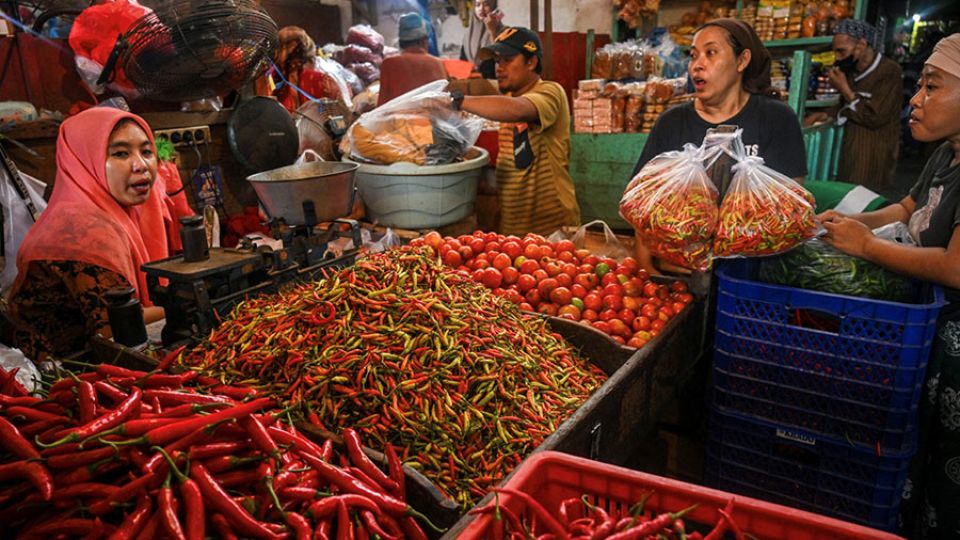
The main drivers of the 2025 inflation surge were volatile food prices and a significant rise in gold prices. Food inflation hit 6.21% year-on-year, with chili pepper, fresh fish, bird’s eye chili, and rice being the key commodities behind this spike. These four items alone contributed 0.63 percentage points to the overall inflation figure. The food, beverages, and tobacco sector ended the year 4.58% higher, making it the leading cause of inflation for the year.
However, the most significant single contributor to the inflation was gold. The precious metal accounted for 0.79 percentage points of the 2.92% inflation, marking its role as the dominant force behind month-to-month CPI growth in 11 out of 12 months of 2025. Gold prices saw a remarkable rise, driven by ongoing geopolitical tensions and trade disruptions. The metal hit a record high of US$4,794 per troy ounce in late December, up nearly 70% from the previous year.
Gold is seen as a safe-haven asset, especially during times of economic uncertainty. With ongoing geopolitical conflicts, including the wars in Gaza and Ukraine, as well as the economic uncertainty triggered by U.S. import tariffs, investors turned to gold for stability. Central banks also increased their gold holdings, partly to reduce reliance on the U.S. dollar, further pushing prices higher.
Read Also
Lower Import Tariff Rates
India’s EV Growth
Global Uncertainty and Its Impact on Inflation
The price increases for both food and gold were exacerbated by a global wave of uncertainty. In particular, the re-imposition of high U.S. import tariffs after President Trump’s re-election in January 2025 sent shockwaves through international trade. This shift caused a prolonged period of instability for exporters worldwide, including those in Indonesia. The U.S.’s push-and-pull strategy in trade negotiations created uncertainty for businesses, which contributed to upward pressure on inflation.
Permata Bank chief economist Josua Pardede warned that persistent global uncertainty would likely keep gold prices high in 2026, putting upward pressure on imported inflation. However, he forecasted that inflation would remain below 3% in 2026, staying within the Bank of Indonesia’s (BI) target range of 2.5% ±1%. This would allow the central bank to maintain an accommodative policy stance, despite potential inflation risks.
Food Inflation and Government Measures
Food inflation could remain a concern, especially with the government’s pro-growth stance, including its free nutritious meals program. Josua predicted that food demand would stay firm this year, creating “upside risks” for volatile food prices. Meanwhile, Bank Danamon economist Hosianna Evalita Situmorang warned that disruption from tropical cyclones could suppress the production of key crops like chili and shallots, adding more pressure to food inflation.
Despite these challenges, the overall inflationary environment is expected to stabilize over time, as the government seeks to address underlying issues and reduce uncertainty in the global trade environment.