
Philippine Electricity Prices are becoming a growing burden for households, small businesses and policymakers as the country continues to face some of the highest power costs in Southeast Asia.
For many Filipino families, the monthly electricity bill is no longer just another household expense. It has become a serious financial pressure point, especially during hotter months when fans, refrigerators and air-conditioners are harder to avoid. Small shop owners are also feeling the squeeze, with higher power costs cutting into already thin margins.
The problem is not caused by one factor alone. The Philippines depends heavily on imported fuel, especially coal and liquefied natural gas. It also has a complex island-based power grid that is expensive to build, maintain and upgrade. On top of that, movements in the peso, higher spot market prices and transmission failures can quickly push costs higher.
Recent rate increases by Manila Electric Co., better known as Meralco, have placed the issue back in the spotlight. The company raised residential rates in April and again in June, leaving many consumers asking why electricity remains so expensive despite years of market reforms.
Philippine Electricity Prices Among Southeast Asia’s Highest
Philippine Electricity Prices remain high compared with many neighboring economies. Data from GlobalPetrolPrices for the first quarter of 2026 placed residential electricity costs in the Philippines at about $0.21 per kilowatt-hour.
That put the country behind only Singapore among six major Southeast Asian economies included in the comparison.
The gap matters because electricity costs affect more than household budgets. High power prices raise operating costs for businesses, reduce disposable income and can make the country less competitive in manufacturing, retail and services.
Meralco Rate Hikes Put Consumers Under Pressure
The pressure became clearer in April when Meralco raised its residential electricity rate by PHP0.53 per kWh to PHP14.35 per kWh.
For a household using 200 kWh, that meant an increase of around PHP107 in one month. Larger homes and small businesses using more power faced bigger increases.
Rates eased slightly in May after an Energy Regulatory Commission refund order, but the relief did not last long. In June, Meralco raised rates again to PHP14.48 per kWh, which it described as the highest monthly residential rate on record.
For consumers, the problem is simple. Electricity is essential, not optional. Families may reduce usage where possible, but many appliances are needed for daily life, especially during extreme heat.
Why Philippine Electricity Prices Keep Rising
The structure of the Philippine power sector helps explain why electricity bills are so sensitive to market movements.
A typical electricity bill includes generation charges, transmission costs, distribution charges, taxes and other regulated fees. Some charges are controlled by regulators, while others move with fuel prices, exchange rates and supply conditions.
The system was shaped by the Electric Power Industry Reform Act of 2001, or EPIRA. The law separated generation, transmission and distribution to encourage competition in power generation while keeping grid and distribution networks regulated.
More than two decades later, the debate continues over whether the system has delivered cheaper power for consumers.
Imported Fuel Keeps Power Costs Volatile
One of the biggest reasons Philippine Electricity Prices remain high is the country’s dependence on imported fuel.
Unlike Malaysia and Indonesia, which have larger domestic fuel resources, the Philippines imports most of the coal and LNG used by its power plants. These fuel purchases are usually priced in dollars, leaving power costs exposed to global energy prices and the peso-dollar exchange rate.
Coal remains the country’s largest power source. Department of Energy data showed that coal accounted for 57.2% of Philippine electricity generation in 2025. Much of that coal was imported.
That means when global coal prices rise or the peso weakens, generation costs can increase quickly.
The same challenge is emerging in natural gas. Gas plants that once relied more heavily on the Malampaya field are increasingly turning to imported LNG as domestic gas output declines. This links part of the country’s power supply more closely to global fuel markets.
A Weaker Peso Adds to Electricity Bills
Currency weakness has also contributed to higher power bills.
For the March supply month, the peso’s depreciation to PHP60.748 against the dollar added about PHP0.5257 per kWh to April’s generation charge.
That shows how foreign exchange movements can directly affect consumers. Even when electricity demand is stable, imported fuel costs can rise if the local currency weakens.
This makes the Philippines more vulnerable than countries that rely more on domestic energy resources or regulated fuel pricing systems.
The Archipelago Problem Behind Philippine Electricity Prices
Fuel is only part of the story. Geography also plays a major role.
The Philippines is made up of more than 7,000 islands. This makes it difficult and costly to build a single power grid like those found in many mainland Southeast Asian countries.
Electricity must move across separate island grids, submarine cables, substations and long transmission lines. Building and maintaining that network requires heavy investment.
The Asian Development Bank estimates that the country needs about $10 billion in transmission investment to expand and strengthen the grid.
Those costs eventually show up in consumer bills.
May Power Shortage Exposed Grid Weakness
The country’s power challenges became more visible in May when transmission failures and supply shortages pushed wholesale electricity prices higher.
Before the disruption, several power plants in Luzon were offline or operating below capacity. At the same time, extreme heat drove electricity demand to record levels.
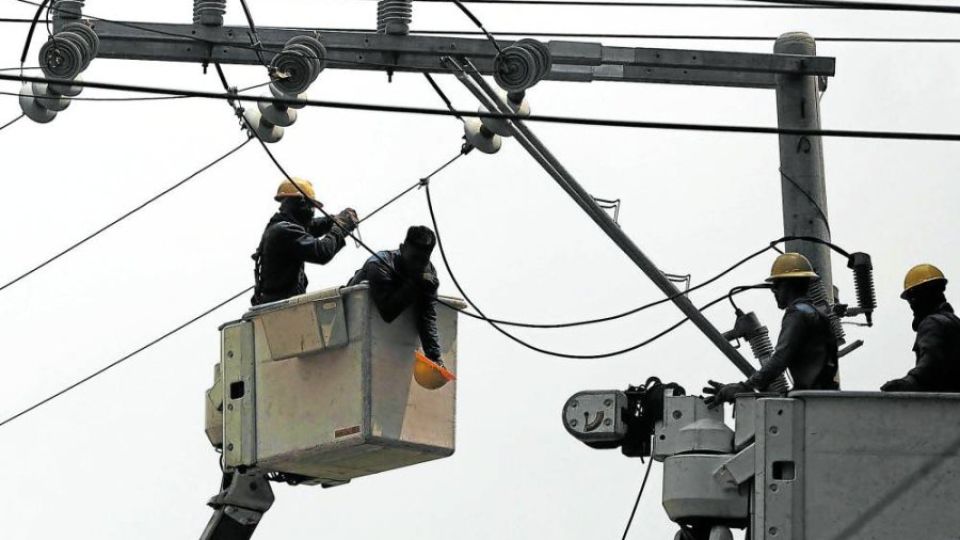
The situation worsened on May 13 when the Ilijan-Dasmariñas and Ilijan-Tayabas 500-kilovolt transmission lines tripped. The failure disconnected more than 2,400 megawatts of generating capacity from the Luzon grid.
The outage led to manual load dropping that affected about 3.9 million customers across Metro Manila and parts of Luzon. The grid entered a multi-day red alert as major power plants were unable to deliver electricity where it was needed.
Wholesale Power Prices Jumped During the Crisis
During the May supply squeeze, prices in the Wholesale Electricity Spot Market rose to about PHP10 to PHP11 per kWh in affected trading intervals.
Market officials said the price increase reflected tight supply rather than a market failure. As cheaper power became unavailable, the system had to rely on more expensive generating units to meet demand.
Safeguards such as the secondary price cap were activated during parts of the alert period to limit extreme spikes.
Still, the incident showed how quickly problems in generation and transmission can reach consumers.
Transmission Delays Add to the Cost Burden
Energy officials have warned that power plants and transmission projects must be completed at roughly the same pace.
If new power plants are ready but transmission lines are delayed, electricity cannot reach consumers efficiently. If transmission projects are completed but generation is delayed, the infrastructure is underused.
Either mismatch can increase costs.
To address this, the Department of Energy issued measures allowing power developers to build connection facilities when the National Grid Corporation of the Philippines cannot complete them on time. Another measure allows the National Transmission Corp. to step in when NGCP falls behind its development commitments.
The goal is to reduce bottlenecks and prevent completed power projects from sitting idle because of missing grid connections.
Scrutiny Grows Over Grid Maintenance
The May failures also raised questions about maintenance.
Energy officials said corrosion had been identified on insulators at Tower 70 of the Dasmariñas-Ilijan line as early as February 2026. Repairs had reportedly been recommended before the outage happened.
The incident renewed concern over whether the transmission system is receiving enough investment and attention as electricity demand grows.
NGCP has said its reporting actions were within regulatory rules. It also pointed to the concentration of power generation in specific areas as a major risk. When several plants are clustered in one location, a single transmission problem can affect a large amount of supply.
Search for Lower Philippine Electricity Prices
Regulators and lawmakers are now under pressure to ease the burden on consumers.
The Energy Regulatory Commission ordered the delayed collection of PHP0.5927 per kWh in generation-related charges to reduce the immediate impact on bills. However, the move only postponed collection. It did not erase the cost.
The Senate also summoned officials from the ERC and Meralco to explain April’s rate increase. Lawmakers proposed several options, including staggering generation charge hikes, reviewing subsidy-related fees, amending EPIRA and examining how refunds are returned to customers.
The House of Representatives also launched an inquiry into the May transmission failures, including questions over reporting and root-cause analysis.
Market Reform Debate Returns
The latest electricity price increases have revived debate over the structure of the Philippine power market.
Generation companies compete to sell electricity, while distribution utilities buy power through supply contracts and recover approved costs from consumers.
Critics have long questioned whether companies with interests in both generation and distribution may have too much influence over power procurement.
Supporters of the current system argue that large distribution utilities can negotiate better prices because they buy electricity in bulk. But that benefit depends on strong regulation, transparent procurement and real competition.
The challenge for policymakers is to keep electricity reliable while preventing excessive costs from being passed to consumers.
What Higher Power Bills Mean for Families and Small Businesses
For ordinary consumers, the debate over fuel costs, grid investment and market design can feel distant. What matters most is the final amount on the bill.
Families have limited room to cut power use during hot months. Fans, refrigerators and air-conditioners are often necessities, not luxuries.
Small businesses face a similar problem. A store owner cannot easily switch off refrigerators, lights or equipment without losing customers or damaging goods. Higher electricity bills therefore reduce profits and make daily operations harder.
This is why Philippine Electricity Prices have become both an economic and social issue.
Outlook for Philippine Electricity Prices
The Department of Energy expects thousands of megawatts of additional power capacity to enter the system in the coming years. That could help ease supply pressure.
However, new generation alone will not solve the problem. Transmission lines, substations and grid connections must expand at the same time. Otherwise, new power plants may not deliver their full benefit to homes and businesses.
The country also remains exposed to imported fuel prices and exchange-rate swings. Until the Philippines reduces that exposure, electricity bills will remain vulnerable to global shocks.
Philippine Electricity Prices Reflect a Bigger Energy Challenge
Philippine Electricity Prices are high because the power system carries several burdens at once. Imported fuel, a weaker peso, an expensive island grid, transmission bottlenecks and supply shortages all feed into monthly bills.
For consumers, the result is painful but familiar: electricity costs that remain among the highest in Southeast Asia.
For policymakers, the task is more complex. The country needs more reliable generation, faster grid investment, stronger regulation and a more balanced energy mix.
Until those changes move faster than demand, Filipino households and businesses are likely to continue paying some of the region’s steepest electricity bills.