
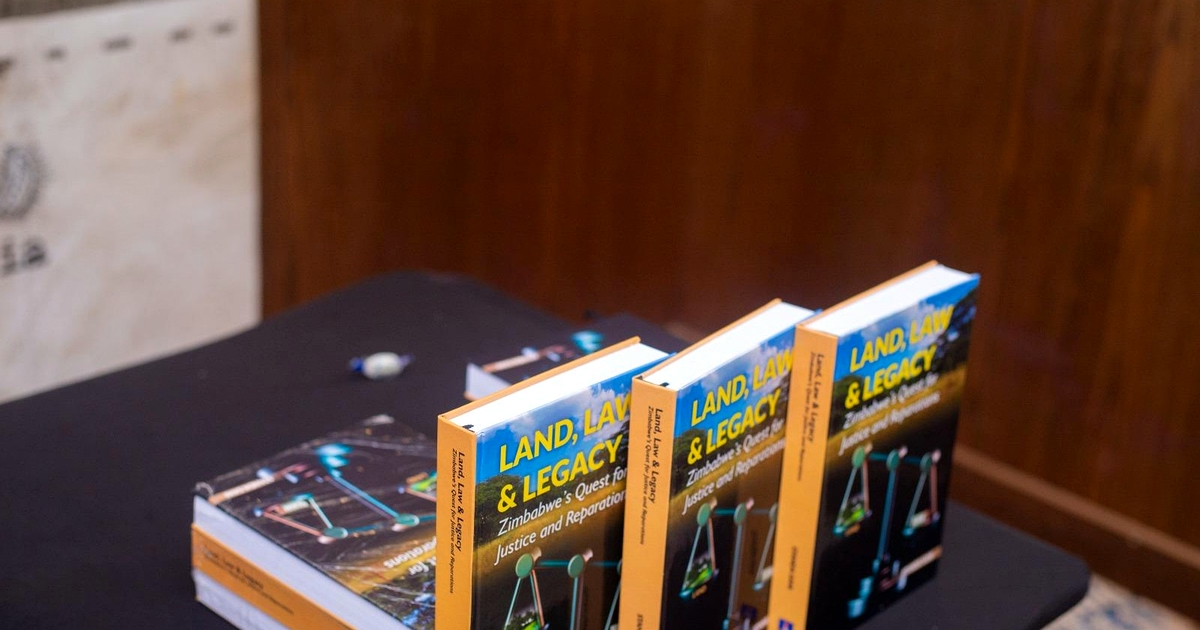
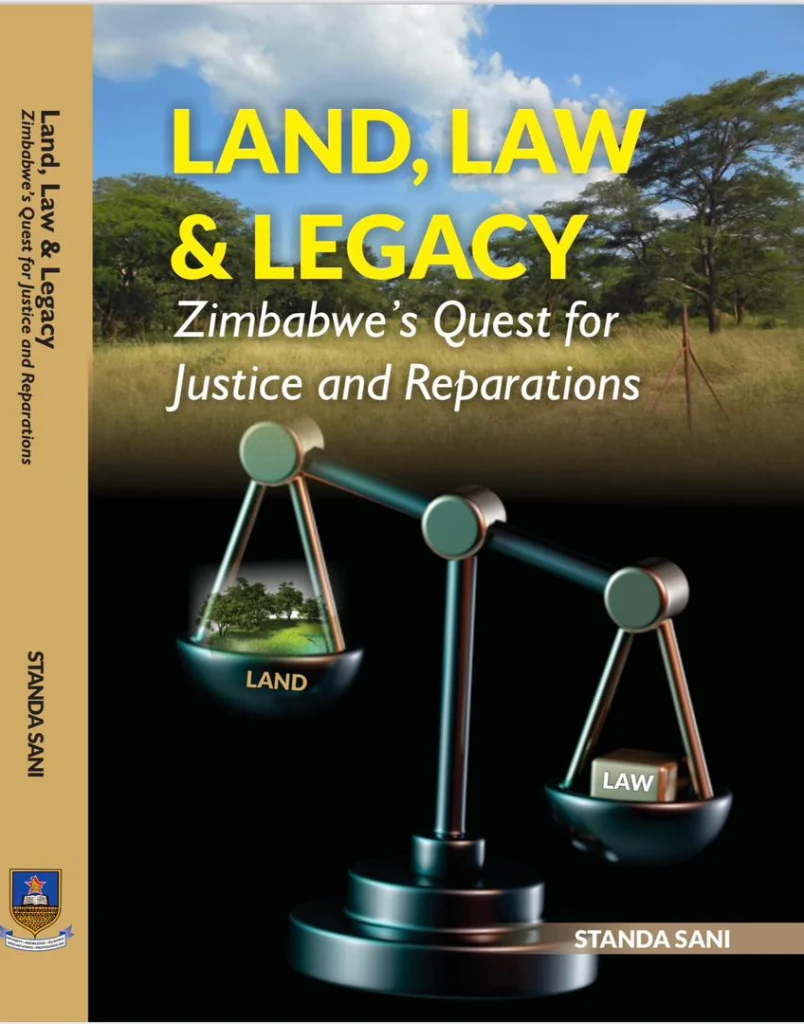
Land, Law & Legacy: Zimbabwe’s Quest for Justice and Reparations offers a timely legal and historical assessment of colonial land dispossession, Zimbabwe’s land reform experience and the pursuit of restorative justice.
HARARE, Zimbabwe — A new book by Zimbabwean legal scholar and author Standa Sani is bringing renewed attention to Zimbabwe’s long-running land debate, examining how colonial dispossession, law, policy and reparations continue to shape one of Africa’s most important questions of historical justice.
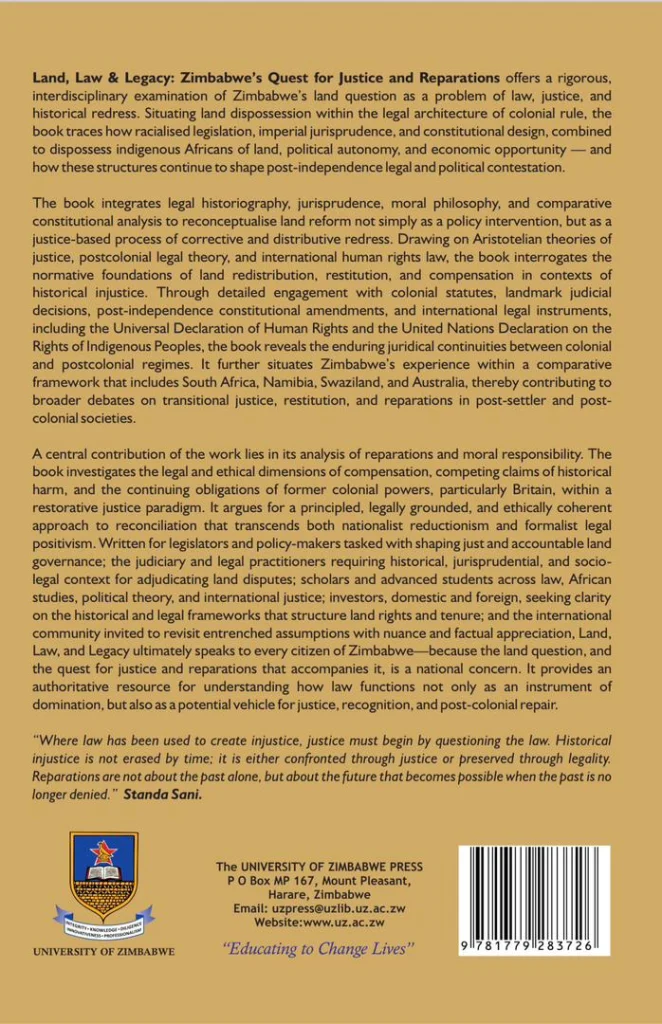
Titled Land, Law & Legacy: Zimbabwe’s Quest for Justice and Reparations, the book provides a detailed examination of Zimbabwe’s land question from colonial conquest to contemporary debates over land reform, compensation, reconciliation and national development.
“Where law has been used to create injustice, justice must begin by questioning the law. Historical injustice is not erased by time; it is either confronted through justice or preserved through legality. Reparations are not about the past alone, but about the future that becomes possible when the past is no longer denied.” — Standa Sani
The publication analyses the legal foundations of land dispossession in Zimbabwe, showing how colonial laws were used to entrench racial inequality in land ownership and access. Sani examines major legislative instruments, including the Land Apportionment Act of 1930, the Native Land Husbandry Act of 1951 and the Land Tenure Act of 1969, which helped institutionalise racial segregation and dispossess indigenous Zimbabweans of ancestral land.
The book also considers key legal developments, including the role of the Privy Council judgment, and how these shaped the country’s land tenure system, property rights framework and later disputes over restitution and compensation.
Beyond law and policy, Land, Law & Legacy explores the moral foundations of Zimbabwe’s land question. Drawing on theories of justice, colonialism, racism and reparations, Sani argues that the land debate must be understood not only as a legal or economic issue, but also as a question of dignity, historical accountability and social repair.
The book places Zimbabwe’s experience within a broader African and international context. It discusses the rise of Pan-Africanism, the role of the Organisation of African Unity and the African Union, and the liberation struggles that shaped Southern Africa’s political and legal landscape.
A key section of the book examines Zimbabwe’s Fast Track Land Reform Programme, launched in 2000. Sani evaluates the programme’s historical basis and its contemporary consequences, including its impact on displaced white commercial farmers, agricultural production, livelihoods, social relations and public policy.
The book also compares Zimbabwe’s land reform experience with approaches taken in South Africa, Namibia, Eswatini and Australia, offering readers a wider perspective on how societies affected by colonial settlement have attempted to address land redistribution, restitution and reparations.
One of the central arguments advanced in the book concerns Britain’s historical responsibility. Sani contends that Britain has a moral and historical obligation to acknowledge the enduring consequences of colonial land policies, racial segregation and the subjugation of indigenous African communities in Zimbabwe.
According to the author, genuine reconciliation requires a serious engagement with the roots of dispossession and the unresolved questions that continue to influence Zimbabwe’s political, legal and economic development.
“This book seeks to contribute to an informed and balanced understanding of Zimbabwe’s land question by examining its historical foundations, legal dimensions and implications for contemporary justice and reparations discourse,” said Sani.
Written for scholars, policymakers, legal practitioners, students and general readers, Land, Law & Legacy: Zimbabwe’s Quest for Justice and Reparations offers a timely contribution to debates on land governance, historical redress, reparations and nation-building.
Availability
Land, Law & Legacy: Zimbabwe’s Quest for Justice and Reparations is available for purchase through the Faculty of Law, University of Zimbabwe, and directly from the author.
About the Author
Standa Sani is a Zimbabwean legal scholar, author and registered legal practitioner whose work focuses on constitutional law, land law, succession law, property law, human rights and historical justice.
Through his scholarship and publications, Sani contributes to legal discourse on land governance, reparations, transformative justice and the continuing legacy of colonialism in Zimbabwe and beyond.
Media, Speaking Engagement and Book Purchase Enquiries
Standa Sani
Email: [email protected]
Email: [email protected]