

US-China Trade War: Tensions Rise as Both Sides Avoid Making First Move
Singapore | May 3, 2025
As tariffs skyrocket between the United States and China, both countries appear caught in a political standoff, each hinting at willingness to negotiate but unwilling to make the first overture.
Beijing announced it is reviewing the possibility of trade negotiations, a development that could finally open the door to ending a trade war that has seen tariffs surge as high as 245% on Chinese exports to the US.
“China is consistent. If it’s a fight, we’ll fight. If it’s dialogue, the door is open,” said a Chinese commerce ministry spokesperson. However, Beijing also emphasized that Washington must first remove “unilateral tariffs.”
A Game of Chicken Between Superpowers
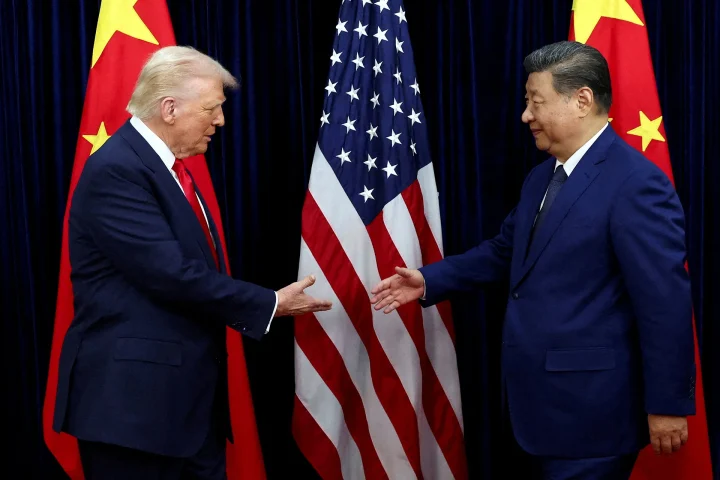
This diplomatic deadlock, experts say, resembles a classic game of chicken between President Donald Trump and Chinese leader Xi Jinping, with both aiming to protect their domestic image while quietly seeking resolution.
“Neither wants to appear weak by initiating talks,” explains Ja Ian Chong, political science professor at the National University of Singapore.
Academic Wen-Ti Sung from the Australian Centre on China in the World described the situation as two speeding cars waiting to see who swerves first. In this metaphor, initiating talks equals showing weakness — a politically risky move.
Word Games and Diplomatic Vagueness
To avoid embarrassment, both governments are leaning into strategic ambiguity. For instance, a Weibo post from an account linked to China’s state media implied the US was desperate to talk, though Beijing denied direct talks had begun.
“This is how both sides test the waters,” said Sung. “They use vague language to craft an off-ramp without losing face.”
Mediators or loosely worded statements may eventually allow both sides to claim they didn’t blink first.
Economic Pressure Mounts at Home
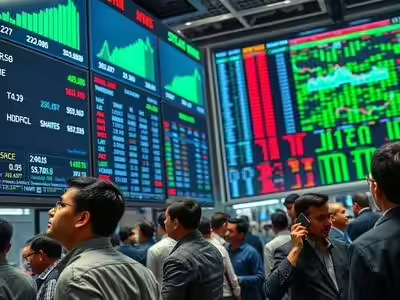
Domestic economics are driving urgency. In the US, fears of a recession have been fueled by a contracting economy in Q1 2025. Meanwhile, China is grappling with low consumer spending, a deepening property crisis, and high unemployment.
US retailers like Walmart have warned that rising tariffs will inflate prices and empty shelves. In China, factories reliant on US demand are starting to feel the pain of declining orders.
“Both Trump and Xi are under pressure to deliver a win at home,” Chong said. “But they also know neither will get everything they want.”
Navigating Toward a Deal
While Trump wants to claim he forced Beijing to concede, Xi needs to preserve China’s narrative of global ascendancy — not capitulation.
“Beijing must maintain the image that the East is rising,” Sung explained. “A visible bow to Washington would damage that perception.”
Yet behind the bluster, analysts believe talks are likely happening discreetly, with both sides laying the groundwork for mutual concessions while preserving face.
“The important part is that they’re talking,” Chong added. “But they’re still posturing, waiting for the other to blink first.”