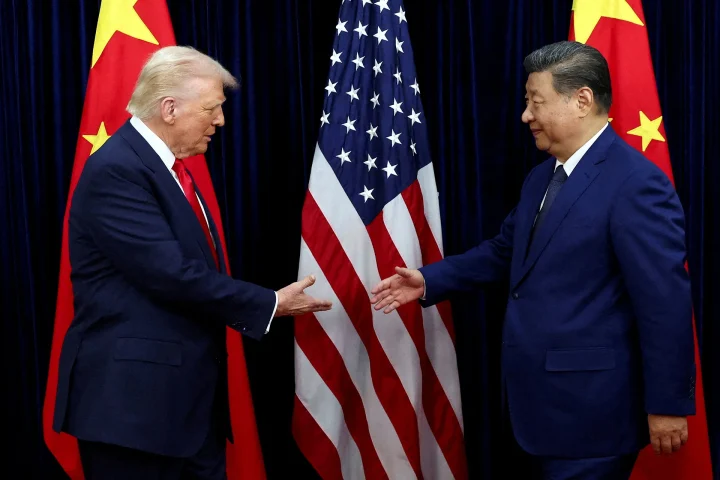


A new wave of Trump’s Asia tariffs has sent shockwaves through global markets, with China issuing a swift and forceful response, and regional supply chains facing growing uncertainty. The tariffs, announced as part of former President Donald Trump’s renewed economic agenda, target a broad spectrum of Asian imports including semiconductors, electronics, machinery, and automotive components.
The move, intended to reduce American dependence on foreign manufacturing and curb China’s economic influence, has instead triggered heightened geopolitical tension, sparking threats of retaliation from Beijing and nervous reactions from neighboring economies and multinational corporations.
Details of the Tariffs and Immediate Impact
The tariff package, unveiled in late March 2025, imposes new duties of 25% to 35% on over $300 billion worth of goods from China, Vietnam, South Korea, Taiwan, and Malaysia. While Trump’s team defends the move as a strategy to “revitalize American industry,” critics argue that it may have unintended consequences—disrupting global production lines and raising costs for U.S. businesses and consumers.
Within 48 hours of the announcement, China condemned the action as “economic bullying” and pledged countermeasures. Beijing’s Ministry of Commerce stated that the country “reserves the right to take all necessary measures to protect its interests,” hinting at the possibility of restricting rare earth exports, vital for U.S. tech and defense sectors.
Regional Fallout and Supply Chain Disruptions
Trump’s Asia tariffs have alarmed companies operating in Asia’s integrated supply chain network. Industries dependent on just-in-time logistics—including electronics, automotive manufacturing, and pharmaceuticals—are particularly vulnerable. Major tech firms with production hubs in Taiwan, South Korea, and mainland China are already reporting anticipated delays and rising input costs.
Vietnam and Malaysia, previously considered safe havens for firms diversifying from China, are now under pressure as they too fall under the tariff net. Southeast Asian governments are urging the U.S. to reconsider the sweeping measures, warning that continued uncertainty could derail regional growth and destabilize trade corridors crucial for the global economy.
China’s Strategic Response and Global Implications
In response to Trump’s Asia tariffs, China is preparing a two-pronged strategy: diplomatic pressure via international trade forums and targeted economic retaliation. Sources within the Chinese government indicate that tariffs on American agricultural exports, suspension of select Boeing aircraft deals, and restrictions on critical raw materials are under review.
Analysts fear this tit-for-tat escalation may reignite a full-scale trade war reminiscent of 2018–2019, with even broader ramifications. At risk are multinational manufacturing contracts, cross-border investments, and global inflation levels—especially at a time when post-pandemic economic recovery remains fragile.
Trump’s Economic Justification and Political Context
Trump’s campaign has framed the tariffs as a bold move to protect American workers, re-shore manufacturing jobs, and hold China accountable for trade imbalances. His economic advisers argue that dependency on Asia has left the U.S. vulnerable to foreign supply shocks, cyber threats, and strategic manipulation.
However, economists warn that Trump’s Asia tariffs could backfire by pushing up prices, triggering corporate restructuring, and shrinking U.S. export access in Asia. Political opponents accuse Trump of using the tariffs as a campaign tool ahead of the 2025 elections, rather than a calculated economic policy.
A New Chapter in Global Trade Uncertainty
The global fallout from Trump’s Asia tariffs has only just begun. As China readies its response and regional economies reassess their trade alignments, the international business community is bracing for another period of turbulence. Whether the move succeeds in reshaping America’s industrial landscape—or plunges the world into another trade standoff—remains to be seen.
What is certain, however, is that the stakes are high, and the consequences will be felt well beyond the borders of Washington and Beijing.