
China’s Property Woes Deepen Amid US Trade Tensions
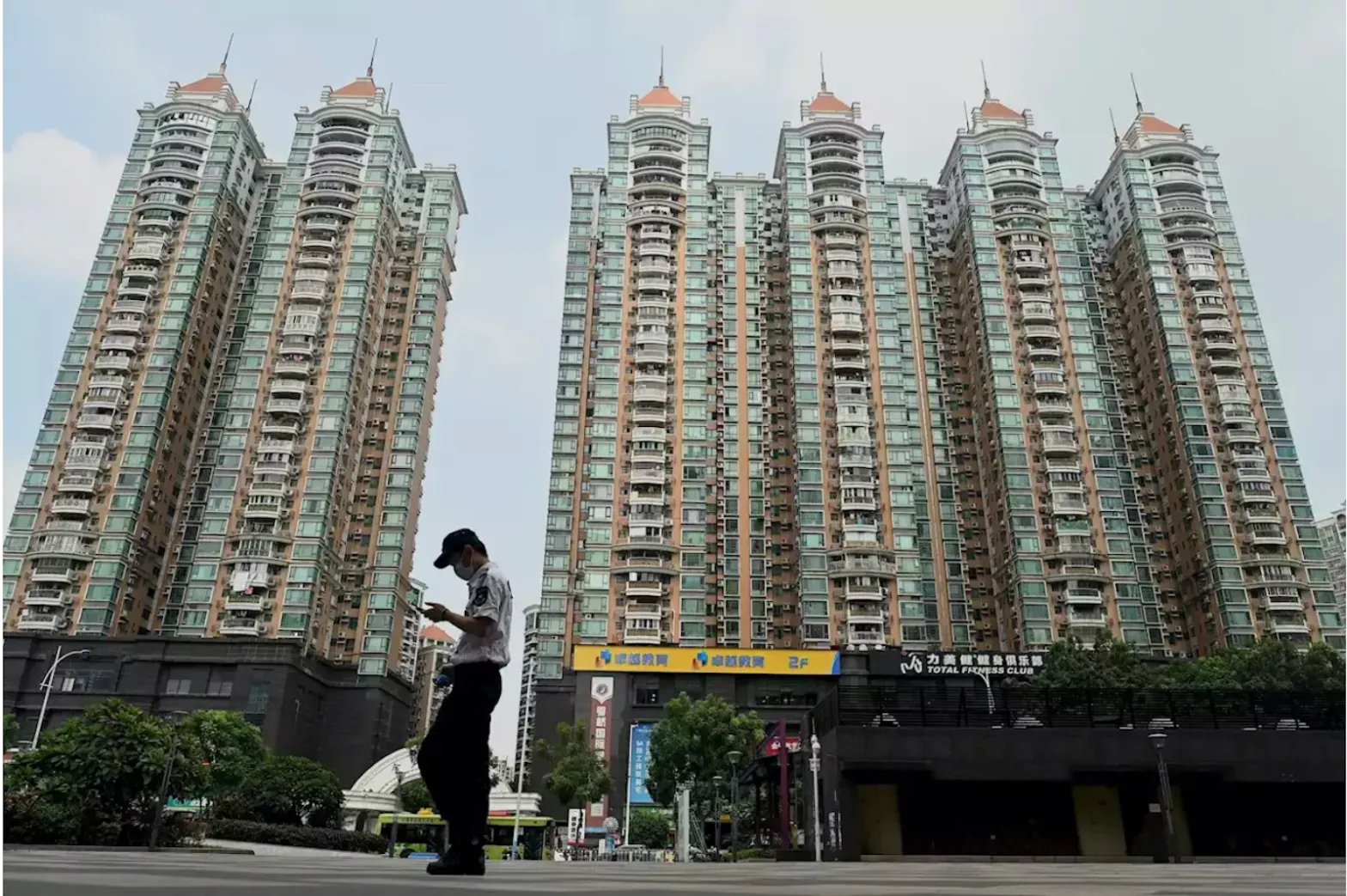
The China property crisis continues to worsen, raising alarm about the country’s economic future. Despite China’s reported growth of 5.3% in the first half of 2025, the property market shows clear signs of strain. Home prices have fallen for the first time in eight months, and major developers like Evergrande are teetering on the brink of collapse, dragging down consumer confidence and threatening long-term economic stability.
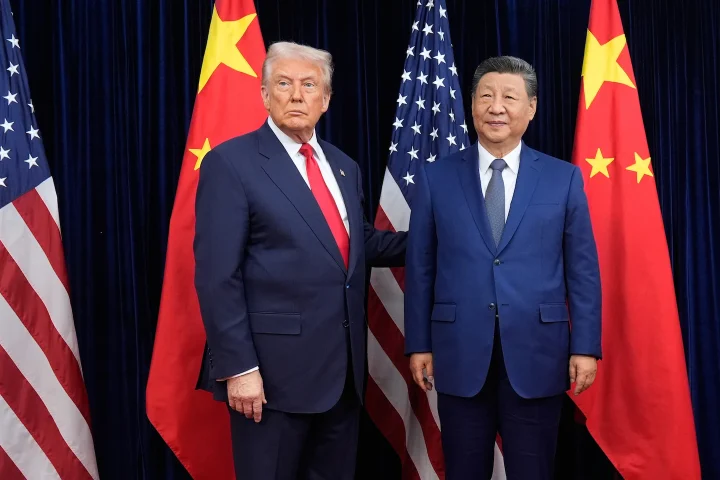
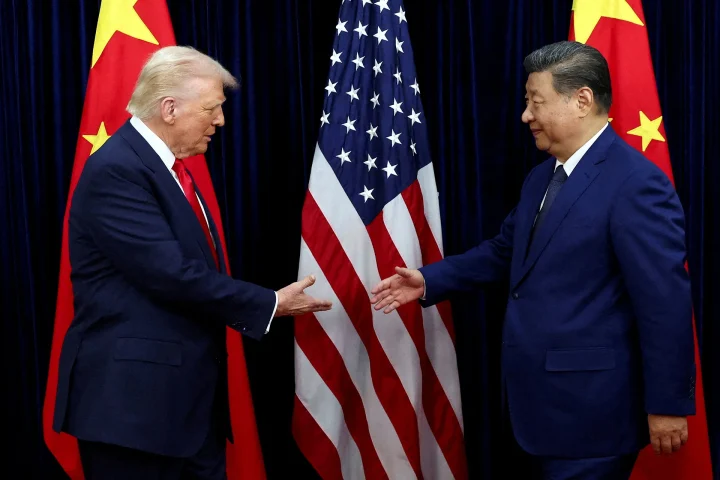
At the same time, US trade tensions with China are intensifying, adding pressure to an already fragile situation. As Donald Trump continues to tighten the screws on trade, China faces not only an economic slowdown but also rising uncertainty in its relations with the US.
The Property Crisis: A Lingering Issue
In June 2025, China saw a 0.27% drop in new home prices, signaling that government stimulus efforts, including September’s property market intervention, have lost their effectiveness. China’s 100 biggest developers reported a 20% decrease in new-home sales for two consecutive months. This continuing decline has many worried that the property market may drag down overall economic growth, pushing China closer to a stagnation period reminiscent of Japan’s “lost decades.”
As the crisis deepens, China Evergrande Group, which symbolizes the property market’s dramatic fall, announced that its Hong Kong stock will be delisted. This marks a symbolic end to the company’s troubles, but it also signals a shift in China’s broader economic troubles.
UBS economist John Lam has warned that the slowing sales momentum and high inventory in tier-one cities could lead to a delayed recovery, exacerbating the situation further.
Read Also
Money – Bizmart Asia
Industry – Bizmart Asia
Trump’s Trade Policies Amplify China’s Struggles
While China struggles to contain the property crisis, Trump’s trade policies continue to weigh heavily on the economy. In addition to the tariffs that have driven up inflation, Trump’s administration has been pushing for a “grand bargain” with China to secure a deal, any deal, to offset the damage caused by the trade war.
However, Xi Jinping’s government knows that Trump’s desperation for a deal could lead to China securing minimal concessions. Analysts argue that Xi sees momentum on his side, with the US more eager for an agreement than China, which could limit the impact of the trade talks.
As China faces these challenges, its need to shift from export-led growth to a consumption-driven economy becomes more urgent. Yet, this transition has been slower than anticipated, with rising youth unemployment and the burden of local government debt hindering consumer spending.
Impact of the Property Crisis on Consumer Confidence
The ongoing property crisis has not only affected the real estate sector but also dampened consumer confidence across China. The downturn in home prices and sales has left many households with negative equity, making it difficult for consumers to invest or spend on non-property goods.
Carlos Casanova, an economist at Union Bancaire Privée, highlights that the real estate sector is pivotal in shaping domestic sentiment, as many households have significant exposure to property. The drop in property activity from May to July 2025 is already affecting retail sales and other sectors, as people hold back from making large purchases.
Structural Challenges and Economic Slowdown
In addition to the property crisis, China is grappling with other structural challenges. The manufacturing sector showed a contraction in July, with the Purchasing Managers’ Index (PMI) falling to 49.3, signaling a slowdown. Although poor weather played a role, economists point to Beijing’s anti-involution efforts, which seek to address overcapacity and price competition, as a major factor.
Economist Chi Lo from BNP Paribas Asset Management argues that China’s ongoing economic restructuring, designed to eliminate inefficient sectors, is inherently contractionary. As a result, employment and economic growth are suffering. Lo further emphasizes the need for stronger fiscal policy and public investment to revive demand and restore confidence.
China’s Path Forward: Can It Avoid the Middle-Income Trap?
With the property crisis and trade tensions undermining economic growth, China’s long-term stability is in question. Laurence Kotlikoff, a professor at Boston University, argues that China needs to build a modern social safety net to give consumers more confidence to spend. Kotlikoff suggests that a fully-funded, progressive Social Security system could help rebuild trust and stability.
Meanwhile, IMF economists highlight the importance of focusing on household spending to boost aggregate demand. While investment-led growth has driven China’s rise, now the country must prioritize consumption to maintain momentum.
Failure to address these challenges could mean that China finds itself trapped in a stagnant upper-middle-income status, unable to break through to higher levels of prosperity. Economists like Nouriel Roubini warn that with rapid aging, a busted real-estate bubble, and rising debt levels, China may struggle to escape this trap.
Conclusion
China’s property crisis is just one symptom of deeper, structural issues within its economy. As trade tensions with the US intensify, and the shift to a consumption-driven economy proves slow, the country faces a difficult road ahead. Whether China can avoid the middle-income trap will depend on how quickly it can address its internal issues, from housing to fiscal policy, and recalibrate its growth strategy.