

Apple’s Global Strategy Faces Disruption as Trump Targets China Tech Supply Chains
Every iPhone bears the phrase “Designed in California,” but behind the sleek American design lies a deeply rooted dependence on China — where nearly 90% of Apple’s smartphones are assembled. Now, with President Donald Trump’s new wave of tariffs, including a proposed 245% tax on some Chinese imports, Apple’s reliance on Chinese manufacturing is under renewed threat.
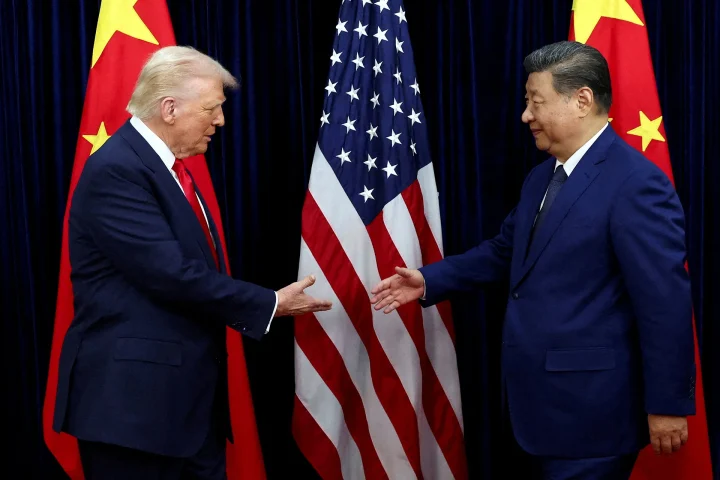
Although smartphones and laptops were recently granted a temporary exemption, Trump’s warning that “NOBODY is getting ‘off the hook’” makes clear that further levies could come soon — potentially targeting semiconductors and the broader electronics sector.
Apple’s supply chain, once hailed as a global marvel, is now a political risk.
How China Became Apple’s Manufacturing Backbone
Apple’s relationship with China dates back to the 1990s, when it partnered with local firms to sell computers. By 2001, it began assembling products like iPods and iPhones with Foxconn, a Taiwanese manufacturer operating in mainland China. Over time, Apple transformed local factories into precision tech hubs, nurturing Chinese firms like Beijing Jingdiao into global manufacturing leaders.
The rise of “iPhone City” — Foxconn’s vast Zhengzhou campus — symbolizes China’s manufacturing power. Today, 150 of Apple’s top 187 suppliers have factories in China, producing everything from batteries to high-end glass and rare earth components.
Apple’s CEO Tim Cook has praised China’s supply chain as “the most critical in the world,” and has maintained close ties with President Xi Jinping.
Trump’s Push for ‘Made in America’ Tech
The Trump administration argues that America must stop depending on Chinese factories for vital tech. Commerce Secretary Howard Lutnick recently claimed even iPhones could be assembled in the US, while White House Press Secretary Karoline Leavitt emphasized plans to bring smartphone, chip, and laptop manufacturing home.
Apple, however, has yet to respond to these shifting policies. Experts like former Apple advisory board member Eli Friedman say moving production to the US is unrealistic. Although Apple has diversified into Vietnam and India, China remains the dominant production base — and relocating such a massive operation would take years.
China Retaliates, Tariff Uncertainty Grows
In response to US tariffs, China has imposed its own 125% duties and restricted exports of rare earth minerals critical to electronics. Even Apple’s shift to Vietnam faces roadblocks — Trump threatened 46% tariffs on Vietnamese goods before pausing enforcement for 90 days.
Any move to shift from China will be slow and expensive. All major alternative countries in Asia are also under tariff threat. According to supply chain analyst Jigar Dixit, “Apple is now squeezed both operationally and politically.”
Struggles in China: Sales, Censorship, and Competition
Apple’s grip on the Chinese smartphone market is loosening. With economic uncertainty, a ChatGPT ban, and rising local rivals like Huawei and Vivo, Apple has lost its top spot. In January, it resorted to rare iPhone discounts to boost sales.
Meanwhile, Apple has been pressured to censor tools like Bluetooth and Airdrop, facing tighter regulations under President Xi’s administration.
Despite a $500 billion US investment plan, political pressure continues to mount — and sudden policy changes could again catch Apple off guard.
What’s Next for Apple?
While smartphone tariffs haven’t crippled the company yet, Friedman warns that “Apple cannot relax.” The unpredictability of Trump’s trade agenda and intensifying US-China rivalry has left Apple stuck between two superpowers — with no easy exit.
As tensions escalate, Apple must navigate an increasingly fragile balance between profit, politics, and production.