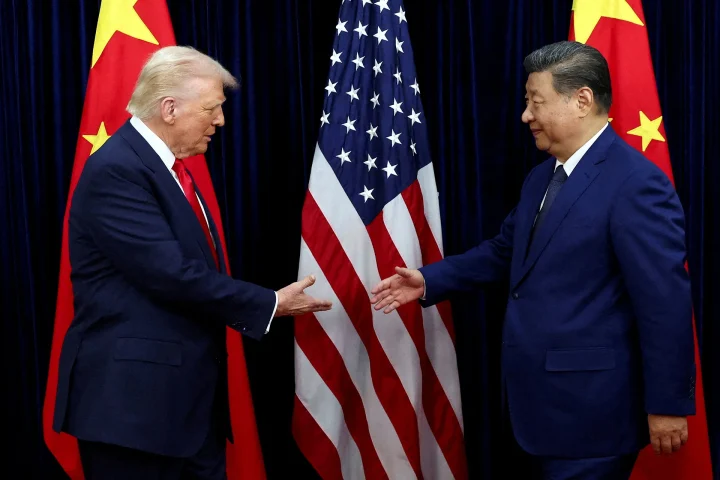


The stage is being carefully set in Beijing for a global power play that places Chinese President Xi Jinping at the center. With both Russian leader Vladimir Putin and North Korea’s Kim Jong Un due to attend China’s September 3 military parade, Xi is sending a clear message ahead of a possible Xi Trump meeting later this year: Beijing now holds many of the diplomatic cards.
For Xi, it is not simply about commemorating the 80th anniversary of Japan’s surrender in World War II. It is about showcasing China’s military strength, diplomatic reach, and ability to convene leaders Washington cannot. While Donald Trump talks of restarting stalled dialogue with Kim and struggles to press Putin into a ceasefire in Ukraine, Xi is preparing to host them both on Chinese soil.
Beijing as the Diplomatic Hub
The presence of Putin underscores China’s positioning as Moscow’s lifeline during the Ukraine war. Officially, Beijing maintains “neutrality” while calling for peace, but Western capitals accuse it of supplying components that support Russia’s war effort. For Kim, the invitation is even more significant: the last time a North Korean leader joined a parade in Beijing was in 1959. His attendance affirms China’s continuing role as Pyongyang’s indispensable partner, with nearly 90% of North Korea’s food imports coming from its giant neighbor.
The optics are powerful. Xi stands beside two of Washington’s most sanctioned adversaries, yet projects himself as the one man with channels to all sides—including the United States. For Trump, who may visit Asia in October, the timing is unavoidable.
Strategic Leverage Over Trump
Trade tensions remain high. A temporary pause on escalating tariffs is in place, but the threat of a wider trade war looms. Xi will arrive at any Xi Trump meeting strengthened by his high-profile contacts with Kim and Putin. He can offer what Washington needs—help nudging Pyongyang back into talks, or leverage over Moscow in Ukraine—while demanding concessions on tariffs, TikTok, or technology access.
Trump, by contrast, has struggled. His earlier summits with Kim ended without breakthroughs, and his attempts to strong-arm the Fed or navigate Ukraine diplomacy have faltered. Xi now positions himself as the indispensable broker in arenas where the US has stumbled.
The Global Stakes
For Russia and North Korea, Beijing’s parade offers legitimacy and backing amid pariah status in the West. For Xi, it consolidates his vision of China as more than a trading powerhouse: a global diplomatic heavyweight. The spectacle also sets the scene for what could be one of the most consequential encounters of 2025.
Could there even be a four-way summit involving Xi, Trump, Putin, and Kim? Unlikely, but the question itself underscores just how far China has advanced its claim to be the true power center in this geopolitical triangle.
The Xi Trump meeting, if it happens, will not be one of equals. By first hosting Kim and Putin, Xi ensures he arrives at the table not as a player trying to catch up, but as the one orchestrating the game.