

Taiwan Air Defence Dome Announced Amid Rising Tensions with China
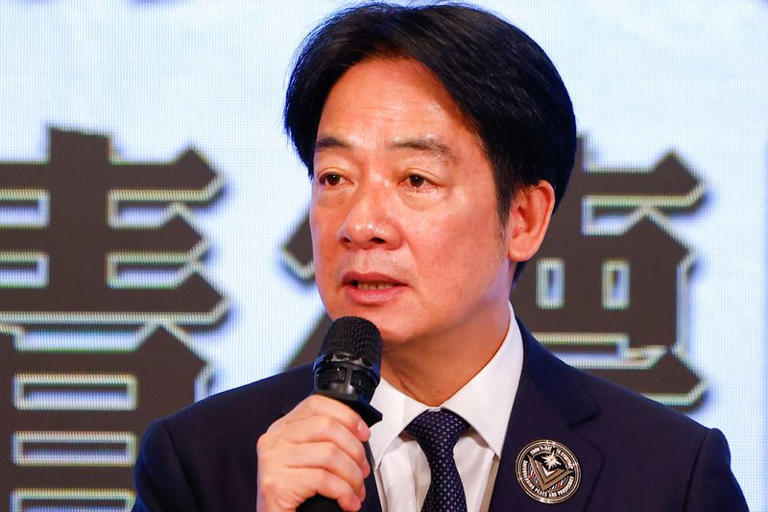
Taiwan will build a “T-Dome” air defence system to protect against what President William Lai described as “hostile threats.” The announcement, made during Taiwan’s National Day celebrations in Taipei, follows a government warning that China is enhancing its military capability to attack the island.
Although Lai did not directly name Beijing, his remarks were widely interpreted as a response to growing Chinese military drills near Taiwanese waters and airspace. He emphasized the “clear necessity” to strengthen national defence and boost spending, citing the need to protect the self-governed island’s sovereignty and citizens.
“Equipped with multi-layered defence, high-level detection, and effective interception, Taiwan’s T-Dome will weave a safety net to protect citizens,” Lai said.
Modelled After Israel’s Iron Dome
Unnamed sources who spoke to Reuters compared the Taiwan air defence dome to Israel’s Iron Dome, a highly advanced anti-missile system capable of intercepting short-range projectiles under any weather conditions. Since 2023, the Iron Dome has proven vital in protecting Israel from thousands of incoming rockets launched by Hamas and Hezbollah.
Analysts believe Taiwan’s T-Dome could incorporate similar multi-layered interception technologies, integrating radar tracking and missile defence systems. However, experts warn that the project will be expensive and technically demanding.
“If the system is modelled after Israel’s, it will require a massive budget. It won’t be easy,” said Hung-Jen Wang, political scientist at National Cheng Kung University.
Political and Financial Challenges Ahead
President Lai announced that Taiwan’s defence budget will increase to more than 3% of GDP next year, with plans to raise it to 5% by 2030. However, the opposition-controlled legislature has blocked several military funding bills this year, making it difficult for Lai’s government to implement large-scale defence projects.
“The building of the T-Dome won’t happen quickly,” said Dennis Weng of Sam Houston State University, who noted that Lai’s remarks were also directed at Washington. The U.S., bound by law to arm Taiwan in the event of an attack, has urged Taipei to invest more in self-defence capabilities.
Despite political pushback, Lai reaffirmed his commitment to strengthening Taiwan’s defences and urged China to renounce the use of force. “We should learn from the suffering of war and ensure that the tragedies of history are never repeated,” he said.
Analysts See Strategic and Symbolic Message
Experts view the Taiwan air defence dome not only as a technological initiative but also as a symbol of deterrence and resilience. By announcing the project on National Day, Lai aimed to project confidence both domestically and internationally while signaling to allies, particularly the United States, that Taiwan is committed to defending itself.
Reviled by Beijing as a “separatist,” Lai has taken a stronger stance on defence than his predecessor Tsai Ing-wen. Under his leadership, Taiwan has expanded its military exercises and civil defence training to prepare citizens for potential emergencies.
As cross-strait tensions remain high, the proposed T-Dome project embodies Taiwan’s growing emphasis on self-reliance, technological defence innovation, and international cooperation in the face of mounting pressure from Beijing.