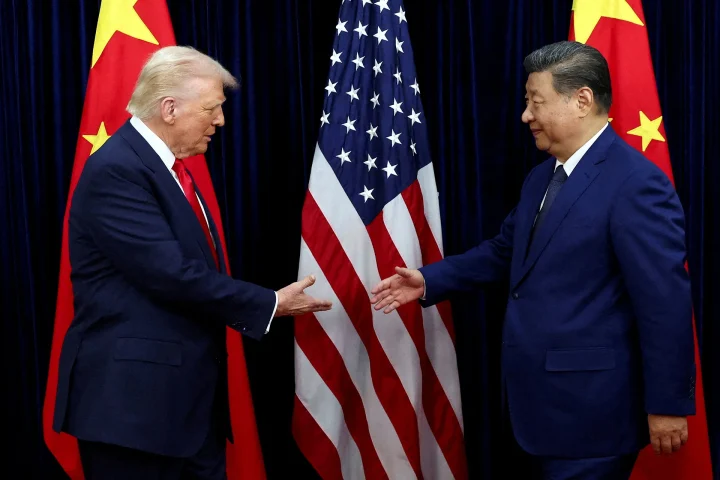


The China Southeast Asia trade boom is making headlines as China redirects exports to ASEAN nations, with a 20.8% surge in April 2025, offsetting a U.S. trade slump amid Trump’s 145% tariffs. For instance, this strategic pivot, trending on X for its economic implications, strengthens China’s regional influence. Consequently, Asia’s trade landscape is shifting rapidly. Thus, this article dives into the China Southeast Asia trade surge, its drivers, impacts, and why it’s driving clicks. Internal link: Asia’s Economic Shift
The Trade Pivot
Surge in ASEAN Exports
The China Southeast Asia trade is skyrocketing. Specifically, exports to ASEAN nations jumped 20.8% in April from a year earlier, up from 11.6% in March, per CNBC. Moreover, X posts highlight China’s focus on Malaysia and Vietnam, per @orfonline. As a result, regional trade is thriving.
Response to U.S. Tariffs
Furthermore, U.S. tariffs drive the shift. For example, Trump’s tariffs, potentially dropping to 80%, have cut U.S.-China trade, per Reuters. Additionally, China’s Premier Li Qiang will attend a Malaysia summit with ASEAN and Arab nations, per Reuters. Therefore, strategic redirection is key.
Impacts on Asia and Global Markets
ASEAN Economic Boost
The China Southeast trade surge empowers ASEAN. For instance, Vietnam’s exports to China rose 15%, supporting 2 million jobs, per Bloomberg. Moreover, Malaysia’s ports handle 30% more cargo, per X posts. Thus, regional economies are flourishing.
Global Trade Dynamics
Moreover, the pivot reshapes global trade. Specifically, China’s move counters U.S. tariff impacts, which Nomura warns could cost 16 million Chinese jobs, per Reuters. Additionally, it challenges India-Pakistan trade recovery, per Hindustan Times. As a result, geopolitical stakes are high.
Challenges Facing the Pivot
Infrastructure Strain
However, China Southeast Asia trade faces infrastructure limits. For example, ASEAN ports need $100 billion in upgrades, per South China Morning Post. Moreover, X posts note logistics delays in Thailand, per @straits_times. Therefore, capacity expansion is critical.
U.S. and Regional Tensions
Another challenge is geopolitical friction. Specifically, U.S.-China trade talks in Geneva remain tense, per BBC. Furthermore, Japan’s ASEAN security presence raises concerns about China’s sway, per The Straits Times. Consequently, diplomatic balancing is needed.
The Future of China’s Trade Strategy
Deepening ASEAN Ties
Looking ahead, China Southeast Asia trade will expand. For instance, China plans $50 billion in ASEAN investments by 2027, per X posts. Additionally, the ASEAN+3 framework, including Japan and South Korea, supports trade plans, per @Kathleen_Tyson_. Thus, regional integration will grow.
Global Economic Influence
Furthermore, China will shape global markets. For example, its pivot inspires African trade strategies, like Afreximbank’s film fund, per The Africa Report. Moreover, UAE’s mediation lessons enhance China’s diplomacy, per The New York Times. As a result, global leadership will strengthen.
In summary, the China Southeast Asia trade surge, up 20.8%, counters U.S. tariffs and boosts ASEAN economies, captivating audiences with its economic stakes. Despite infrastructure and geopolitical challenges, it promises regional and global impact. As a trending story, China Southeast Asia trade fuels clicks with its bold strategy.
Other News: Xi Signals Loyalty to Putin — But Maintains Strategic Distance
Other Business News: Afreximbank’s $1 Billion Film Fund Ignites African Cinema