
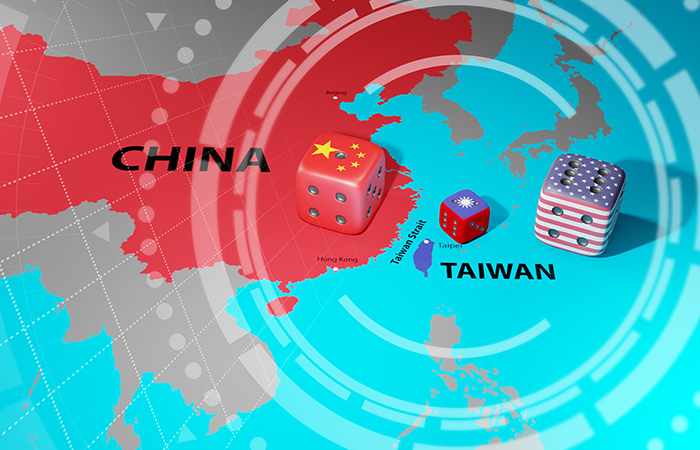
U.S. Secretary of Defense Pete Hegseth has issued a stark warning about an “imminent” threat posed by China to Taiwan, urging Asia-Pacific allies to significantly increase defense spending and collaborate closely with the United States to prevent conflict in the region.
Speaking at the Shangri-La Dialogue in Singapore, Hegseth emphasized that while the U.S. does not seek confrontation with Beijing, it also will not be sidelined or allow its partners to be coerced by China’s growing military assertiveness.
Hegseth described China as aggressively seeking regional dominance, stating that Beijing is actively preparing to use force, with President Xi Jinping reportedly pushing for military readiness by 2027—a timeline frequently cited by U.S. intelligence but never officially confirmed by China.
“Any attempt by Communist China to conquer Taiwan by force would result in devastating consequences for the Indo-Pacific and the world,” Hegseth warned. “The threat is real—and it could be imminent.”
While maintaining that Washington is not interested in regime change or military encirclement, Hegseth made it clear that the U.S. intends to maintain a strong presence in Asia and expects its allies to do the same. Drawing parallels with NATO, he urged Asian countries to match Europe’s commitment to defense spending, referencing U.S. President Donald Trump’s push for NATO members to contribute at least 5% of GDP toward defense.
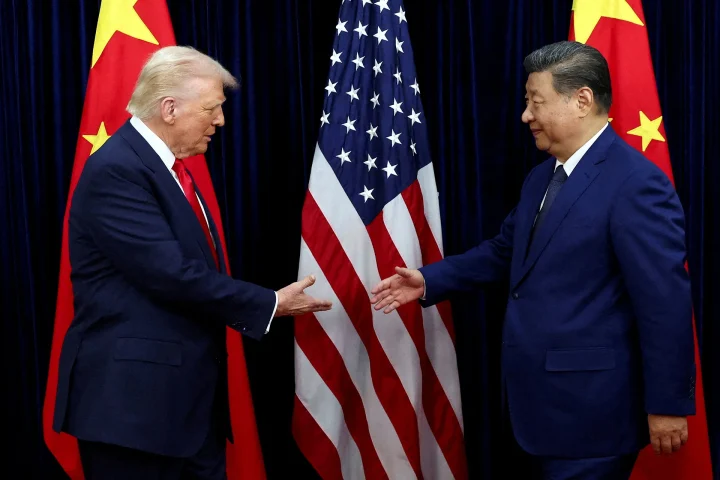
China responded swiftly and critically. In a statement posted by the Chinese Embassy in Singapore, Beijing accused the U.S. of being the “biggest troublemaker” in the region, citing aggressive surveillance in the South China Sea and the deployment of advanced weaponry. The embassy labeled Hegseth’s remarks as provocative and misleading, adding that Washington contributes “uncertainty” to global peace.
Notably, China sent only a low-level delegation to the summit and canceled a scheduled speech, marking a strategic withdrawal from its usual high-profile participation at the dialogue, where U.S.-China tensions are often center stage.
Hegseth’s remarks also included a call for strengthened defense industry partnerships, unveiling new joint initiatives such as a radar repair facility in Australia and regional drone production efforts. He cautioned Asian nations against relying too heavily on economic ties with China, arguing that Beijing uses trade as “strategic leverage” to expand its influence and undermine U.S. defense commitments.
The Defense Secretary also highlighted Trump’s “common sense” foreign policy philosophy, portraying the U.S. as a non-interventionist partner focused on pragmatism rather than ideological evangelism.
However, not all members of the U.S. delegation echoed this sentiment. Senator Tammy Duckworth, a Democrat and member of the Senate Foreign Relations Committee, pushed back, saying the Trump-Hegseth vision lacks alignment with American democratic values and international norms.
“We stand for human rights and the rule of law,” she told reporters, criticizing Hegseth’s messaging as “patronizing” and dismissive of the mutual respect required in true alliances.
Meanwhile, Republican delegates praised the speech for its clarity and assertiveness, claiming that many Asian leaders welcomed the strong U.S. stance on maintaining peace and sovereignty in the region.
As the U.S. and China continue their strategic tug-of-war over Asia, Hegseth’s warning reflects the growing urgency in Washington to counter Beijing’s military rise—especially around Taiwan, where tensions could rapidly escalate into a global crisis.https://www.youtube.com/watch?v=x-tb1zu8cuQ