
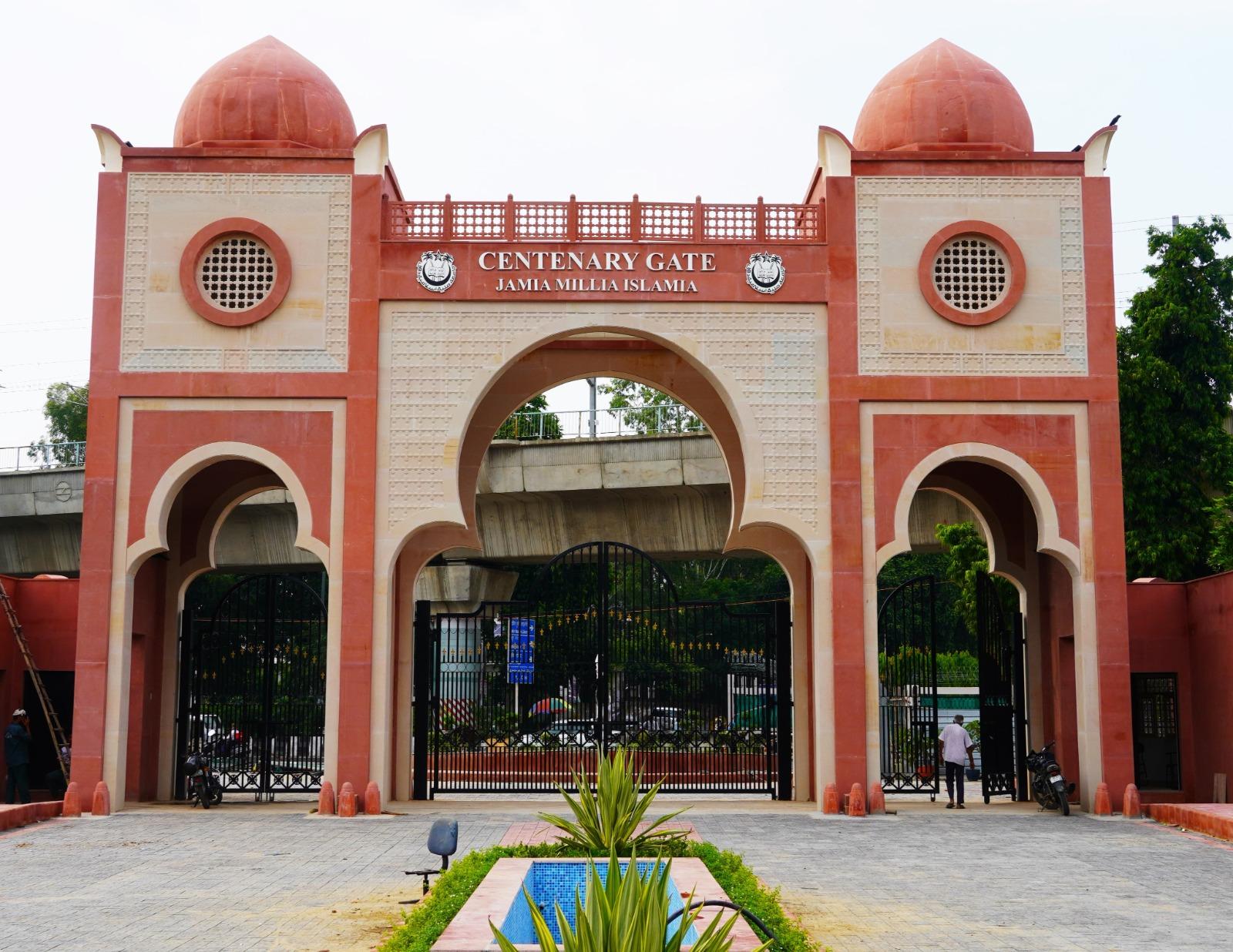
NEW DELHI: The controversy surrounding Jamia Millia Islamia Registrar Prof. Md. Mahtab Alam Rizvi has moved well beyond a disagreement over a newspaper report, a defamation complaint or the reputation of one university official. It has developed into a far more consequential test of institutional accountability, media freedom and judicial restraint. At its centre is a deceptively simple question: when serious allegations are raised concerning the qualifications, appointment and career progression of a senior official at a public university, should the immediate response be to silence the reporting or to independently investigate the allegations and establish what is true? Prof. Rizvi unquestionably has the right to defend his reputation and seek legal protection against malicious or demonstrably false claims. Equally, journalists have no licence to publish fabricated allegations as facts. But constitutional democracy requires another distinction that cannot be ignored: an allegation is not a conviction, but neither does a disputed allegation automatically become unworthy of public scrutiny. When the subject of the controversy is a senior official exercising authority within a Central University, questions concerning his professional record and the institutional procedures that produced his appointment can possess a legitimate public-interest dimension. The central concern, therefore, is not whether Prof. Rizvi should be protected from falsehood. He should. It is whether protection of reputation can become, even temporarily, a substitute for determining the truth of the underlying questions.
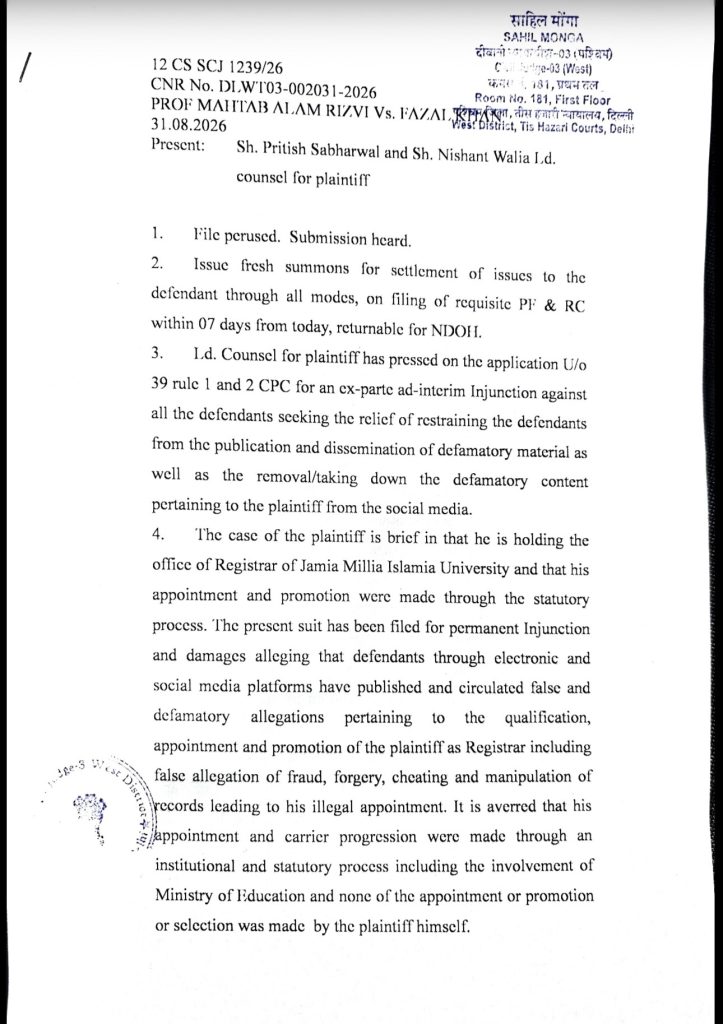
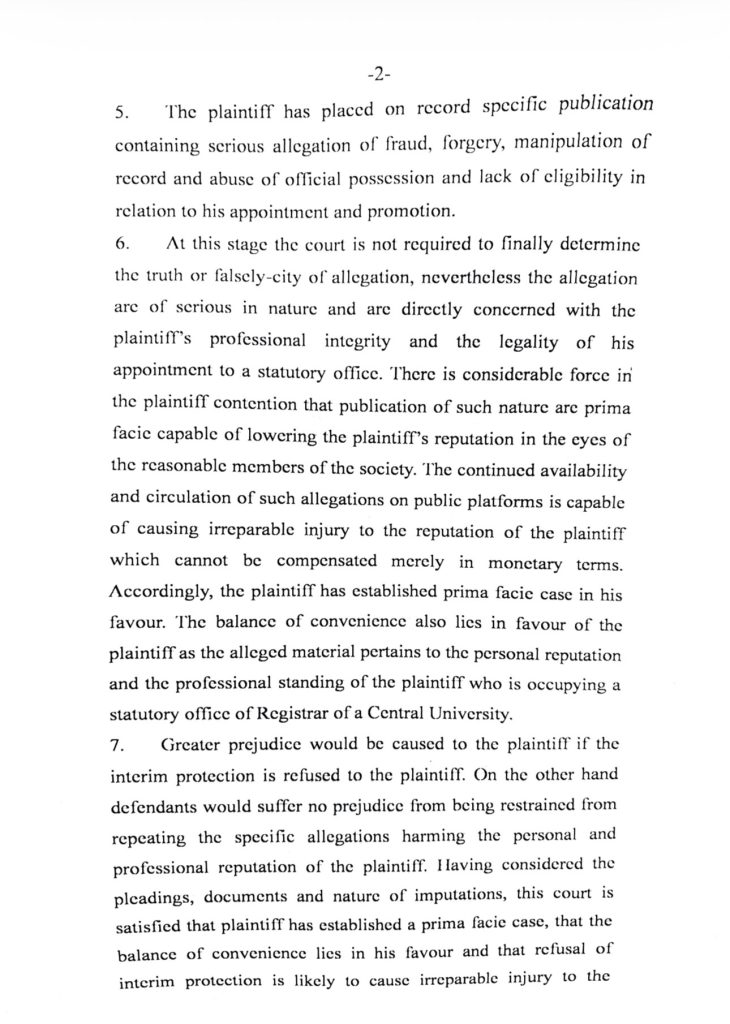
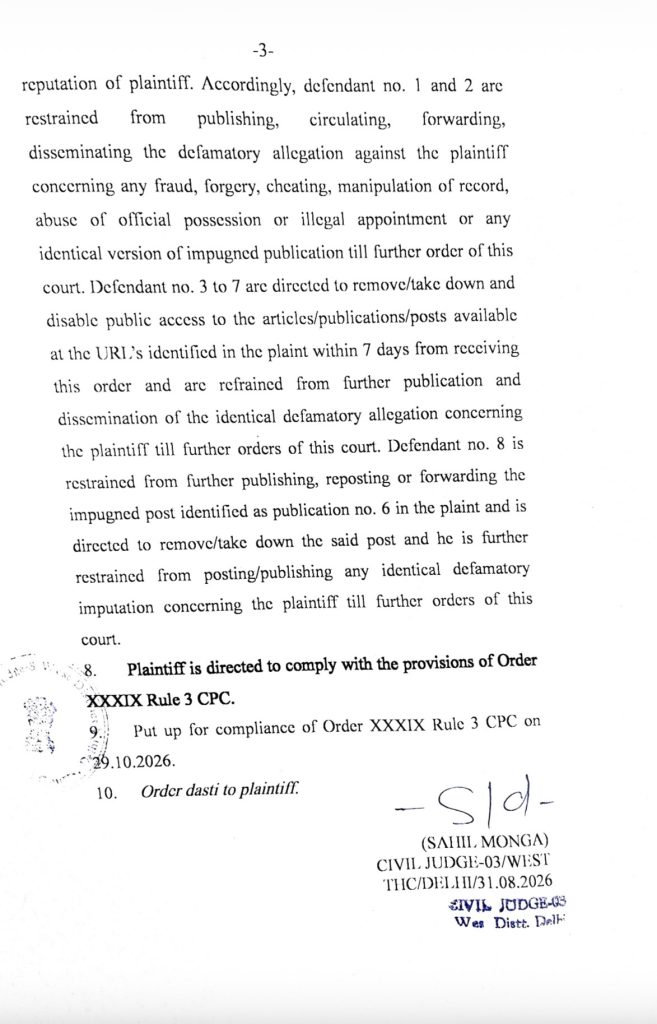
The judicial proceedings make that tension particularly significant. The interim order concerning publication and circulation of allegations relating to Prof. Rizvi records claims concerning his qualifications, appointments, promotion, professional experience and eventual appointment as Registrar, while making clear that the court was not finally deciding the truth or falsity of those allegations at the interim stage. Yet specified publications and social-media material were restrained or directed to be removed. That creates an uncomfortable constitutional asymmetry: the factual dispute remains unresolved, while public discussion about the dispute is restricted. Courts have legitimate authority to prevent unlawful defamation and protect individuals from serious reputational harm, and interim relief can be justified in appropriate circumstances. But speech concerning public institutions and senior public officials occupies a particularly sensitive space because restricting it can affect not merely the plaintiff and defendant but also the public’s ability to evaluate matters of institutional governance. A temporary order may be temporary in legal terminology, but its practical consequences for journalism can be much longer lasting. Digital reports disappear from search results, readers lose access to contested material, publications may lack the financial capacity to sustain prolonged litigation, and other journalists may decide that investigating powerful institutions is simply too legally hazardous. The result can be a chilling effect without any formal declaration that press freedom has been suspended. The danger is not that courts protect reputation; the danger is that the protection of reputation becomes so expansive that the underlying public-interest question is never adequately examined.
The allegations concerning Prof. Rizvi did not emerge in an entirely abstract context. Published reports have described a complaint seeking investigation into aspects of his academic qualifications, professional experience and career progression, including questions concerning eligibility and the assessment of experience claimed in connection with his academic appointments. Some reports have referred to alleged inconsistencies in professional records and questioned the processes through which his progression from academic appointments to the office of Registrar was approved. These are allegations contained in a complaint and media reports, not judicial findings of guilt, and that distinction must remain central to any responsible reporting. Yet the seriousness of the allegations is precisely why the appropriate institutional response should be verification. If Prof. Rizvi’s qualifications were properly established, his claimed experience satisfied the applicable standards and every stage of his appointments was conducted according to the relevant rules, an independent examination should be capable of demonstrating that conclusively. If the allegations are false, documentary clarification would provide a powerful defence. If errors or irregularities are identified, they can be addressed through the appropriate legal and institutional mechanisms. Either outcome would strengthen public confidence. What does not resolve the underlying controversy is simply preventing the public from discussing it. Silence can suppress a question; it cannot answer it.
The larger institutional issue is therefore not merely Prof. Rizvi’s personal reputation but the integrity of the mechanisms through which senior university officials are appointed and promoted. If questions are raised about eligibility, professional experience or the validity of academic appointments, scrutiny should logically extend to the institutional bodies that examined and approved those credentials. Who verified the documents? Which criteria were applied? What evidence was placed before the relevant committees? How was professional experience assessed? Were the applicable University Grants Commission requirements followed? Were the same standards applied consistently to all candidates? These are not questions that presuppose wrongdoing. They are precisely the questions that a transparent appointment system should be able to answer. Public universities are entrusted with public resources and exercise enormous influence over academic careers, research opportunities and the educational future of students. Their senior appointments therefore cannot be treated as matters of purely private interest whenever questions arise. The public is entitled to confidence that qualifications were properly examined and institutional procedures were followed. The higher the office, the stronger the obligation to demonstrate integrity in the process through which that office was attained.
This principle becomes even more important when the controversy is viewed against Jamia Millia Islamia’s broader struggles with questions of transparency. The university has recently faced protests over alleged irregularities in its spot-admission process, with students questioning aspects of waiting-list movement and seat allocation. Jamia rejected the allegations and maintained that its admission process was transparent, while disciplinary action was subsequently taken against students involved in the protests. None of those allegations, by themselves, establishes that Jamia manipulated admissions. Students are also subject to legitimate disciplinary rules, and universities have a right to maintain order. But the episode illustrates a larger problem of institutional confidence: when students question an administrative process, the strongest answer is not simply that the allegations are baseless; it is to make the process sufficiently transparent that the allegations can be tested against the record. If a waiting-list system has been properly administered, the relevant criteria, vacancies, movement of candidates and reasons for decisions should provide the clearest possible explanation, subject of course to privacy and legal restrictions. Administrative action against protesters may address conduct, but it cannot by itself establish the correctness of the underlying administrative process. Evidence does.
The controversy surrounding academic appointments also extends beyond Prof. Rizvi. Reporting by The New Indian Express has raised questions concerning the appointment of Dr. Masud Alam as an Assistant Professor in Jamia’s Arabic Department, including allegations relating to possible links with the Vice-Chancellor and questions about the appointee’s background. The report itself appropriately noted that some claims could not be independently verified and that the status or outcome of an alleged criminal case could not immediately be confirmed. That qualification is essential because journalism must distinguish between verified facts, allegations and unknowns. But that same distinction exposes the weakness in treating every contested allegation as something that must disappear from public discussion. Unverified does not mean proven; but unverified also does not mean that investigation should be prohibited. The responsible path is to establish what can be established, identify what remains disputed and seek authoritative clarification. Public institutions should not demand that journalists wait for the conclusion of every conceivable legal proceeding before reporting that a complaint has been made or that a legitimate question exists, provided the reporting accurately attributes the allegation and makes clear that it has not been proven.
The judiciary’s role in this environment is extraordinarily difficult. The Constitution protects freedom of speech and expression under Article 19(1)(a), while the law also recognises legitimate interests in protecting reputation. Neither right exists without limits, and courts must balance competing interests according to law. But interim restrictions on public-interest speech deserve particular caution because they alter the information environment before the underlying dispute has been finally adjudicated. When the subject matter involves a senior official of a public institution, the court must consider not only the potential reputational injury to the individual but also the public interest in receiving information and the democratic value of institutional scrutiny. The question is not whether reputation matters; it is whether the remedy chosen to protect reputation is proportionate to the harm alleged and whether it unnecessarily prevents legitimate scrutiny of matters affecting the public. A clarification, correction, response or right of reply may sometimes address inaccurate reporting without removing the broader public discussion. In other cases, stronger judicial intervention may be justified. But the constitutional principle should be that speech is not restrained more broadly than necessary, particularly when the facts themselves remain under dispute.
The potential consequences extend far beyond Jamia. If journalists, students and researchers begin to believe that raising questions about public appointments can result in immediate legal restraint before the factual basis of their reporting is fully examined, investigative journalism will naturally become more cautious. Smaller publications are particularly vulnerable because even a legally defensible story can become financially unsustainable when litigation continues for years. A journalist may not fear the truth of the allegation as much as the cost of proving that the reporting was responsible. That is how institutional scrutiny can weaken without a single journalist being formally censored. The chilling effect operates through uncertainty, expense and fear. And once that culture becomes normal, the most powerful institutions may become the least scrutinised precisely because they possess the greatest capacity to litigate.
That is why the most constructive response to the Prof. Rizvi controversy would be an independent examination of the underlying allegations rather than a permanent contest over who can control the narrative. If questions have been raised concerning qualifications, professional experience, academic appointments or institutional procedures, the competent authorities should examine the relevant documents and records. If the allegations are demonstrably false, the findings should clear Prof. Rizvi and restore confidence in his professional record. If reporting contains inaccuracies, those inaccuracies should be corrected. If any institutional irregularity is established, the relevant authorities should take action under the law. Every possible outcome is preferable to an unresolved controversy in which one side is protected from criticism while the underlying factual questions remain unanswered.
The issue is therefore bigger than Prof. Rizvi personally. It concerns whether Jamia can demonstrate that its appointment and administrative systems are robust enough to withstand independent scrutiny. It concerns whether a public university understands transparency as an obligation rather than an inconvenience. And it concerns whether courts, while protecting legitimate reputational rights, can remain sufficiently sensitive to the democratic consequences of restricting reporting on public institutions. Prof. Rizvi should not be presumed guilty. Jamia should not be presumed guilty. Journalists should not be presumed truthful merely because they publish an allegation. But neither should the university, its officials or the judiciary presume that public scrutiny itself is illegitimate simply because it is uncomfortable.
The most dangerous precedent would be a culture in which serious questions concerning powerful institutions are answered not by documents, explanations and independent investigation but by legal orders that make the questions disappear from public view. That would confuse the protection of reputation with the protection of institutions from scrutiny.
A public official’s reputation deserves legal protection; a public institution’s credibility deserves something else evidence. The two should not be treated as interchangeable. If Prof. Rizvi’s record is sound, transparency can demonstrate it. If the allegations are false, an independent inquiry can establish that. If mistakes were made, accountability can correct them. None of these outcomes requires the public to be permanently silenced.
The Prof. Rizvi controversy should therefore become a test of principle rather than a battle of personalities. The answer to an allegation is not conviction, but neither is it silence. The answer is investigation, documentary verification, due process and transparent findings. Jamia has the opportunity to demonstrate that its institutional systems can withstand scrutiny. Prof. Rizvi has the opportunity to have disputed questions about his professional record conclusively addressed. The judiciary has the opportunity to demonstrate that protection of reputation and protection of public-interest journalism need not be mutually exclusive. And the media has the responsibility to report allegations with precision, attribution and fairness rather than converting claims into conclusions.
Ultimately, credibility cannot be obtained by preventing people from asking questions. It is earned by answering them. A university confident in the integrity of its appointments should not fear scrutiny; a public official confident in the integrity of his record should not fear independent verification; and a constitutional democracy confident in its institutions should not fear uncomfortable questions.
The central question is therefore no longer whether Prof. Rizvi has the right to defend his reputation. He does. The question is whether the public has the right to ask how a senior official reached a position of institutional authority and whether those questions will be answered through evidence or silenced before the evidence is examined.
NEW DELHI: The controversy surrounding Jamia Millia Islamia Registrar Prof. Md. Mahtab Alam Rizvi has moved well beyond a disagreement over a newspaper report, a defamation complaint or the reputation of one university official. It has developed into a far more consequential test of institutional accountability, media freedom and judicial restraint. At its centre is a deceptively simple question: when serious allegations are raised concerning the qualifications, appointment and career progression of a senior official at a public university, should the immediate response be to silence the reporting or to independently investigate the allegations and establish what is true? Prof. Rizvi unquestionably has the right to defend his reputation and seek legal protection against malicious or demonstrably false claims. Equally, journalists have no licence to publish fabricated allegations as facts. But constitutional democracy requires another distinction that cannot be ignored: an allegation is not a conviction, but neither does a disputed allegation automatically become unworthy of public scrutiny. When the subject of the controversy is a senior official exercising authority within a Central University, questions concerning his professional record and the institutional procedures that produced his appointment can possess a legitimate public-interest dimension. The central concern, therefore, is not whether Prof. Rizvi should be protected from falsehood. He should. It is whether protection of reputation can become, even temporarily, a substitute for determining the truth of the underlying questions.
The judicial proceedings make that tension particularly significant. The interim order concerning publication and circulation of allegations relating to Prof. Rizvi records claims concerning his qualifications, appointments, promotion, professional experience and eventual appointment as Registrar, while making clear that the court was not finally deciding the truth or falsity of those allegations at the interim stage. Yet specified publications and social-media material were restrained or directed to be removed. That creates an uncomfortable constitutional asymmetry: the factual dispute remains unresolved, while public discussion about the dispute is restricted. Courts have legitimate authority to prevent unlawful defamation and protect individuals from serious reputational harm, and interim relief can be justified in appropriate circumstances. But speech concerning public institutions and senior public officials occupies a particularly sensitive space because restricting it can affect not merely the plaintiff and defendant but also the public’s ability to evaluate matters of institutional governance. A temporary order may be temporary in legal terminology, but its practical consequences for journalism can be much longer lasting. Digital reports disappear from search results, readers lose access to contested material, publications may lack the financial capacity to sustain prolonged litigation, and other journalists may decide that investigating powerful institutions is simply too legally hazardous. The result can be a chilling effect without any formal declaration that press freedom has been suspended. The danger is not that courts protect reputation; the danger is that the protection of reputation becomes so expansive that the underlying public-interest question is never adequately examined.
The allegations concerning Prof. Rizvi did not emerge in an entirely abstract context. Published reports have described a complaint seeking investigation into aspects of his academic qualifications, professional experience and career progression, including questions concerning eligibility and the assessment of experience claimed in connection with his academic appointments. Some reports have referred to alleged inconsistencies in professional records and questioned the processes through which his progression from academic appointments to the office of Registrar was approved. These are allegations contained in a complaint and media reports, not judicial findings of guilt, and that distinction must remain central to any responsible reporting. Yet the seriousness of the allegations is precisely why the appropriate institutional response should be verification. If Prof. Rizvi’s qualifications were properly established, his claimed experience satisfied the applicable standards and every stage of his appointments was conducted according to the relevant rules, an independent examination should be capable of demonstrating that conclusively. If the allegations are false, documentary clarification would provide a powerful defence. If errors or irregularities are identified, they can be addressed through the appropriate legal and institutional mechanisms. Either outcome would strengthen public confidence. What does not resolve the underlying controversy is simply preventing the public from discussing it. Silence can suppress a question; it cannot answer it.
The larger institutional issue is therefore not merely Prof. Rizvi’s personal reputation but the integrity of the mechanisms through which senior university officials are appointed and promoted. If questions are raised about eligibility, professional experience or the validity of academic appointments, scrutiny should logically extend to the institutional bodies that examined and approved those credentials. Who verified the documents? Which criteria were applied? What evidence was placed before the relevant committees? How was professional experience assessed? Were the applicable University Grants Commission requirements followed? Were the same standards applied consistently to all candidates? These are not questions that presuppose wrongdoing. They are precisely the questions that a transparent appointment system should be able to answer. Public universities are entrusted with public resources and exercise enormous influence over academic careers, research opportunities and the educational future of students. Their senior appointments therefore cannot be treated as matters of purely private interest whenever questions arise. The public is entitled to confidence that qualifications were properly examined and institutional procedures were followed. The higher the office, the stronger the obligation to demonstrate integrity in the process through which that office was attained.
This principle becomes even more important when the controversy is viewed against Jamia Millia Islamia’s broader struggles with questions of transparency. The university has recently faced protests over alleged irregularities in its spot-admission process, with students questioning aspects of waiting-list movement and seat allocation. Jamia rejected the allegations and maintained that its admission process was transparent, while disciplinary action was subsequently taken against students involved in the protests. None of those allegations, by themselves, establishes that Jamia manipulated admissions. Students are also subject to legitimate disciplinary rules, and universities have a right to maintain order. But the episode illustrates a larger problem of institutional confidence: when students question an administrative process, the strongest answer is not simply that the allegations are baseless; it is to make the process sufficiently transparent that the allegations can be tested against the record. If a waiting-list system has been properly administered, the relevant criteria, vacancies, movement of candidates and reasons for decisions should provide the clearest possible explanation, subject of course to privacy and legal restrictions. Administrative action against protesters may address conduct, but it cannot by itself establish the correctness of the underlying administrative process. Evidence does.
The controversy surrounding academic appointments also extends beyond Prof. Rizvi. Reporting by The New Indian Express has raised questions concerning the appointment of Dr. Masud Alam as an Assistant Professor in Jamia’s Arabic Department, including allegations relating to possible links with the Vice-Chancellor and questions about the appointee’s background. The report itself appropriately noted that some claims could not be independently verified and that the status or outcome of an alleged criminal case could not immediately be confirmed. That qualification is essential because journalism must distinguish between verified facts, allegations and unknowns. But that same distinction exposes the weakness in treating every contested allegation as something that must disappear from public discussion. Unverified does not mean proven; but unverified also does not mean that investigation should be prohibited. The responsible path is to establish what can be established, identify what remains disputed and seek authoritative clarification. Public institutions should not demand that journalists wait for the conclusion of every conceivable legal proceeding before reporting that a complaint has been made or that a legitimate question exists, provided the reporting accurately attributes the allegation and makes clear that it has not been proven.
The judiciary’s role in this environment is extraordinarily difficult. The Constitution protects freedom of speech and expression under Article 19(1)(a), while the law also recognises legitimate interests in protecting reputation. Neither right exists without limits, and courts must balance competing interests according to law. But interim restrictions on public-interest speech deserve particular caution because they alter the information environment before the underlying dispute has been finally adjudicated. When the subject matter involves a senior official of a public institution, the court must consider not only the potential reputational injury to the individual but also the public interest in receiving information and the democratic value of institutional scrutiny. The question is not whether reputation matters; it is whether the remedy chosen to protect reputation is proportionate to the harm alleged and whether it unnecessarily prevents legitimate scrutiny of matters affecting the public. A clarification, correction, response or right of reply may sometimes address inaccurate reporting without removing the broader public discussion. In other cases, stronger judicial intervention may be justified. But the constitutional principle should be that speech is not restrained more broadly than necessary, particularly when the facts themselves remain under dispute.
The potential consequences extend far beyond Jamia. If journalists, students and researchers begin to believe that raising questions about public appointments can result in immediate legal restraint before the factual basis of their reporting is fully examined, investigative journalism will naturally become more cautious. Smaller publications are particularly vulnerable because even a legally defensible story can become financially unsustainable when litigation continues for years. A journalist may not fear the truth of the allegation as much as the cost of proving that the reporting was responsible. That is how institutional scrutiny can weaken without a single journalist being formally censored. The chilling effect operates through uncertainty, expense and fear. And once that culture becomes normal, the most powerful institutions may become the least scrutinised precisely because they possess the greatest capacity to litigate.
That is why the most constructive response to the Prof. Rizvi controversy would be an independent examination of the underlying allegations rather than a permanent contest over who can control the narrative. If questions have been raised concerning qualifications, professional experience, academic appointments or institutional procedures, the competent authorities should examine the relevant documents and records. If the allegations are demonstrably false, the findings should clear Prof. Rizvi and restore confidence in his professional record. If reporting contains inaccuracies, those inaccuracies should be corrected. If any institutional irregularity is established, the relevant authorities should take action under the law. Every possible outcome is preferable to an unresolved controversy in which one side is protected from criticism while the underlying factual questions remain unanswered.
The issue is therefore bigger than Prof. Rizvi personally. It concerns whether Jamia can demonstrate that its appointment and administrative systems are robust enough to withstand independent scrutiny. It concerns whether a public university understands transparency as an obligation rather than an inconvenience. And it concerns whether courts, while protecting legitimate reputational rights, can remain sufficiently sensitive to the democratic consequences of restricting reporting on public institutions. Prof. Rizvi should not be presumed guilty. Jamia should not be presumed guilty. Journalists should not be presumed truthful merely because they publish an allegation. But neither should the university, its officials or the judiciary presume that public scrutiny itself is illegitimate simply because it is uncomfortable.
The most dangerous precedent would be a culture in which serious questions concerning powerful institutions are answered not by documents, explanations and independent investigation but by legal orders that make the questions disappear from public view. That would confuse the protection of reputation with the protection of institutions from scrutiny. A public official’s reputation deserves legal protection; a public institution’s credibility deserves something else evidence. The two should not be treated as interchangeable. If Prof. Rizvi’s record is sound, transparency can demonstrate it. If the allegations are false, an independent inquiry can establish that. If mistakes were made, accountability can correct them. None of these outcomes requires the public to be permanently silenced.
The Prof. Rizvi controversy should therefore become a test of principle rather than a battle of personalities. The answer to an allegation is not conviction, but neither is it silence. The answer is investigation, documentary verification, due process and transparent findings. Jamia has the opportunity to demonstrate that its institutional systems can withstand scrutiny. Prof. Rizvi has the opportunity to have disputed questions about his professional record conclusively addressed. The judiciary has the opportunity to demonstrate that protection of reputation and protection of public-interest journalism need not be mutually exclusive. And the media has the responsibility to report allegations with precision, attribution and fairness rather than converting claims into conclusions.
Ultimately, credibility cannot be obtained by preventing people from asking questions. It is earned by answering them. A university confident in the integrity of its appointments should not fear scrutiny; a public official confident in the integrity of his record should not fear independent verification; and a constitutional democracy confident in its institutions should not fear uncomfortable questions.
The central question is therefore no longer whether Prof. Rizvi has the right to defend his reputation. He does. The question is whether the public has the right to ask how a senior official reached a position of institutional authority and whether those questions will be answered through evidence or silenced before the evidence is examined.
– Muhammad Al Gebaly in Dubai