
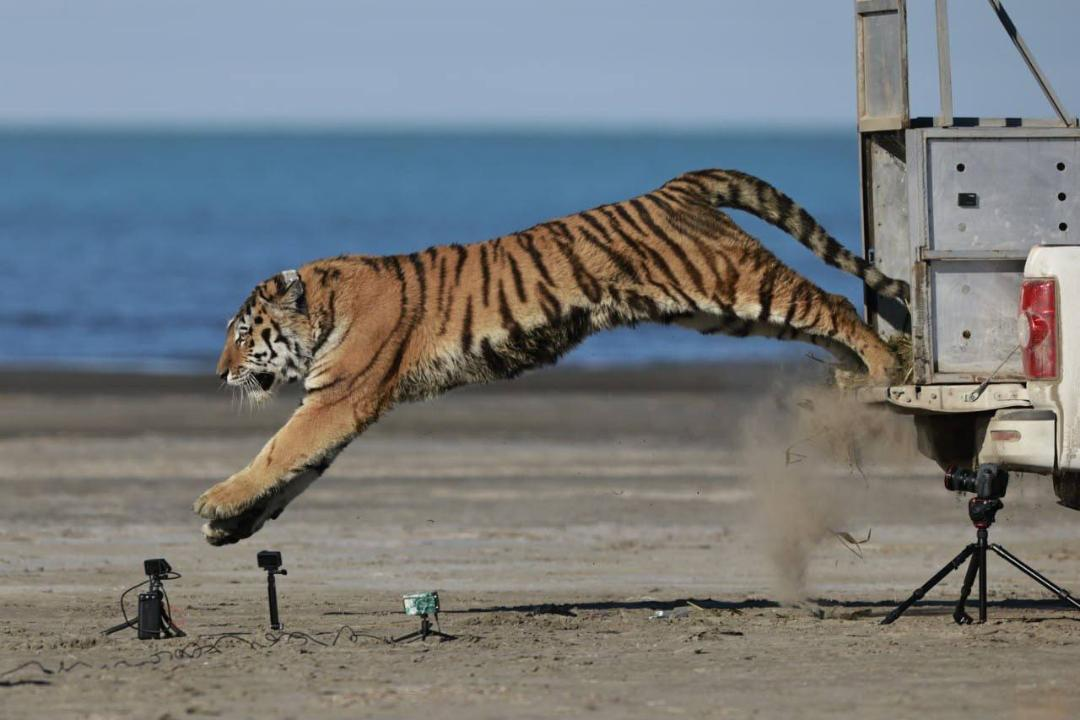
Kazakhstan has released a second tiger into the wild, marking another step in its programme to restore the predators after an absence of more than 70 years.
The male Amur tiger, named Amur, was released into Ile-Balkhash State Nature Reserve on October 31, 2026, according to a government announcement published on November 2.
He joins Umit, a female released on July 31, as conservation specialists assess whether the animals can establish themselves in their new surroundings.
The programme’s long-term objective is a population capable of surviving and breeding independently. Two releases represent an early stage in that process, rather than the completion of Kazakhstan’s tiger recovery.
Where was Amur released?
Amur was released in the Ile-Balkhash State Nature Reserve, within a region historically inhabited by tigers.
The reserve forms the centre of Kazakhstan’s reintroduction work, which combines preparing individual animals for release with restoring habitat and supporting prey populations.
| Key detail | Information |
|---|---|
| Tiger | Amur |
| Sex | Male |
| Type | Amur tiger, also known as the Siberian tiger |
| Release date | October 31, 2026 |
| Location | Ile-Balkhash State Nature Reserve |
| Previous release | Female tiger Umit, July 31, 2026 |
| Programme objective | Establish a self-sustaining wild tiger population |
Kazakhstan’s ecology authorities described the release as the result of cooperation involving reserve staff, conservation specialists and international partners.
Health and hunting assessments preceded release
Before entering the reserve’s open habitat, Amur spent time in a specially equipped acclimatisation enclosure under specialist supervision.
Veterinary and behavioural assessments examined his health, hunting ability, capacity to obtain food independently and response to people.
These checks helped determine whether he was ready for release. Preparing a large predator for independent life requires more than confirming that it is physically healthy: specialists must also assess whether its behaviour is suitable for the wild.
Amur was fitted with a satellite collar, allowing the conservation team to follow his movements and monitor his adaptation.
read Also:Tiger Sugar
First released tiger is hunting independently
Umit’s progress has provided an initial indication of how the reintroduction programme is developing.
According to the release coverage, specialists report that she is exploring the reserve and hunting independently. Her movements are also monitored through a satellite collar.
Amur’s arrival introduces a second adult tiger into the landscape, but successful reproduction is not assured. Establishing a viable population will require continued monitoring and further conservation work.
Habitat restoration remains central
Kazakhstan’s tiger recovery programme extends beyond releasing animals.
Tigers need adequate space, prey and protection to survive. Restoring those conditions is therefore essential to making the return sustainable.
Work at Ile-Balkhash includes strengthening prey populations and conservation infrastructure. Specialists must also understand how the released animals use the landscape and whether they approach settlements or livestock.
A dedicated conflict-response team supports this work by tracking tiger movements, communicating with nearby communities and preparing to respond to incidents.
Protecting residents and their livelihoods is an important part of maintaining support for the programme.
More tigers remain under supervision
Two younger tigers remain under specialist care while they develop and undergo preparation.
Decisions about their eventual release will depend on their age, health, behaviour and readiness for independent life. Their presence in the programme does not mean release dates have been fixed.
For Amur and Umit, the immediate priorities are successful adaptation, independent hunting and continued monitoring. Their progress will help shape the next stages of Kazakhstan’s effort to bring wild tigers back to a landscape where they had disappeared for generations.
Read Also: Green Advertising Dubai and the Reinvention of Public Media in the UAE