
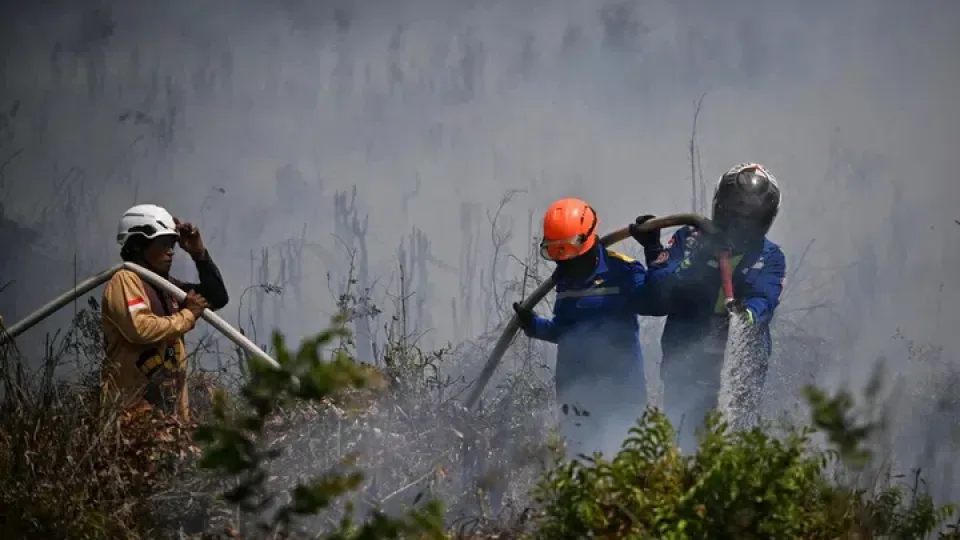
Indonesian police have named 20 companies as suspects in forest and land fire investigations, escalating enforcement against businesses allegedly responsible for fires contributing to regional haze.
Four of the corporate suspects have foreign investment, while the remaining 16 are Indonesian-owned, authorities said during an October 29 briefing in Pontianak, West Kalimantan.
Police have also named 245 individuals as suspects in separate fire-related cases. Being designated a suspect does not establish guilt; the cases remain subject to legal proceedings. Indonesian National Police
Twenty suspects emerge from investigations into 97 companies
The corporate suspects are part of a wider investigation involving 97 companies.
According to police figures reported by The Straits Times, 22 of those businesses have foreign backing. The other 77 companies in the overall investigation have not been named as suspects.
Authorities identified the four foreign-backed corporate suspects only by the initials HKI, RKA, API and AI. Police said their investors were linked to Singapore, Malaysia and South Korea, without providing full company names or detailed parent-company structures.
The distinction between the figures is important: the 22 foreign-backed companies belong to the broader investigation, not the group of 20 designated suspects.
Singapore and Malaysia account for most foreign-linked firms
Police gave the following breakdown of foreign investment links among the 22 companies under investigation:
| Investor country identified by police | Companies under investigation |
|---|---|
| Singapore | 9 |
| Malaysia | 8 |
| Britain | 2 |
| China | 1 |
| Japan | 1 |
| South Korea | 1 |
| Total | 22 |
These investment links do not, by themselves, establish wrongdoing by investors or parent companies. Authorities have not publicly detailed each company’s ownership structure or alleged conduct.
Police recommend revoking 23 business permits
Alongside the criminal investigations, police have asked the relevant regulators to revoke the business permits of 23 companies.
Investigators cited repeated fires within concessions, evidence that fires originated on company land, inadequate firefighting infrastructure and burned areas exceeding 500 hectares.
The recommendations are not completed revocations. Final authority to withdraw the permits rests with the responsible government regulators. ANTARA News
The permit recommendations and corporate suspect designations are separate enforcement measures. The published figures do not establish the extent of overlap between the two groups.
Fire investigations cover thousands of hectares
Police recorded 104 reports involving corporate cases linked to approximately 29,169 hectares of burned land.
Separate investigations involving individuals cover 287 police reports and about 5,859 hectares. Those inquiries have resulted in 245 people being named as suspects.
Authorities said they were using scientific investigation methods to establish responsibility and gather evidence. Police also urged communities to avoid clearing land by burning. ANTARA News
National police criminal investigation chief Asep Safrudin said enforcement would address both deliberate burning and fires allegedly resulting from negligence.
Singapore pursues information from companies
The crackdown has also prompted scrutiny in Singapore.
According to the supplied Straits Times report, Singapore’s National Environment Agency issued legal notices to 10 Indonesian companies seeking documents and information about their possible links to the fires.
Senior executives from those firms were called to a meeting with Senior Minister K. Shanmugam on October 28. Separately, the Singapore Exchange asked seven listed agricultural companies about their operations and potential exposure to the incidents.
Indonesian police did not establish whether the four foreign-backed corporate suspects were among the companies targeted by Singapore’s inquiries.
Investigations expected to widen
President Prabowo Subianto has urged police and prosecutors to pursue both corporate and individual responsibility for the fires.
The cases place attention on whether plantation operators maintained adequate prevention and response systems, as well as how fires began and spread within their concessions.
Asep said further companies could be designated as suspects as investigators examine the evidence. The next stages will include decisions on prosecution and regulatory consideration of the proposed permit withdrawals.
Read Also: Venezuela’s Oil Industry Decline and the US’s Plan to Revitalize It