
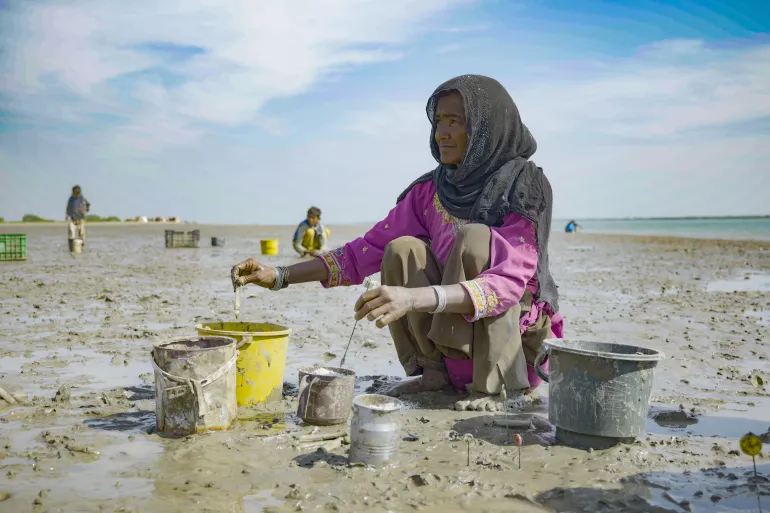
On a bright afternoon at Dando Jetty, a small fishing community in Pakistan’s Indus Delta, fishermen unload their catch. Nearby, another boat prepares to set sail toward the Arabian Sea.
The soulful voice of Sindhi folk singer Fouzia Soomro plays from a loudspeaker on a moored boat, blending with the coastal breeze.
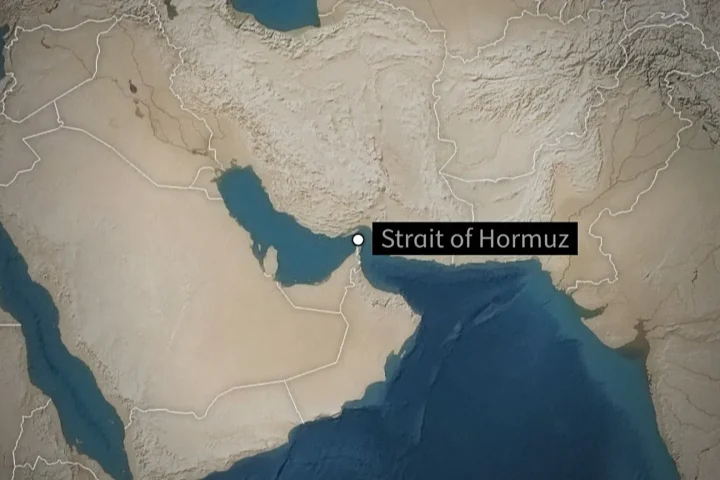
Located 130 kilometers (81 miles) from Karachi, Dando Jetty sits on Khobar Creek, one of the last surviving waterways of the Indus River in Thatta, Sindh.
“This creek should have freshwater flowing into the sea,” says Zahid Sakani as he boards a boat to visit his ancestral village, Haji Qadir Bux Sakani, three hours away. “Instead, it’s all seawater now.”
Six years ago, Sakani, 45, was a farmer. His village, once thriving, was swallowed by the sea. Forced to leave, he migrated to Baghan, 15 kilometers (nine miles) away, and became a tailor to survive.
Today, Kharo Chan’s port is eerily silent. Stray dogs wander its deserted paths, and abandoned boats vastly outnumber those still in use. Sakani visits occasionally to pay respects at the graves of his father and ancestors.
“We farmed 200 acres (81 hectares) and raised livestock,” he recalls. “But the sea took everything.”
Kharo Chan once had 42 villages. Now, only three remain. Rising waters have forced thousands to flee to other villages or Karachi.
Government data shows a dramatic decline in Kharo Chan’s population, from 26,000 in 1988 to just 11,403 in 2023.
The crisis extends beyond Kharo Chan. In the last decade, rising sea levels have submerged dozens of villages across the Indus Delta, erasing entire communities.