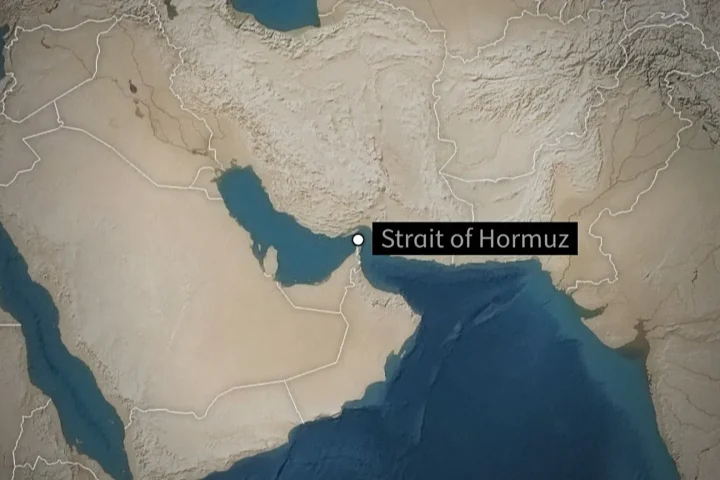

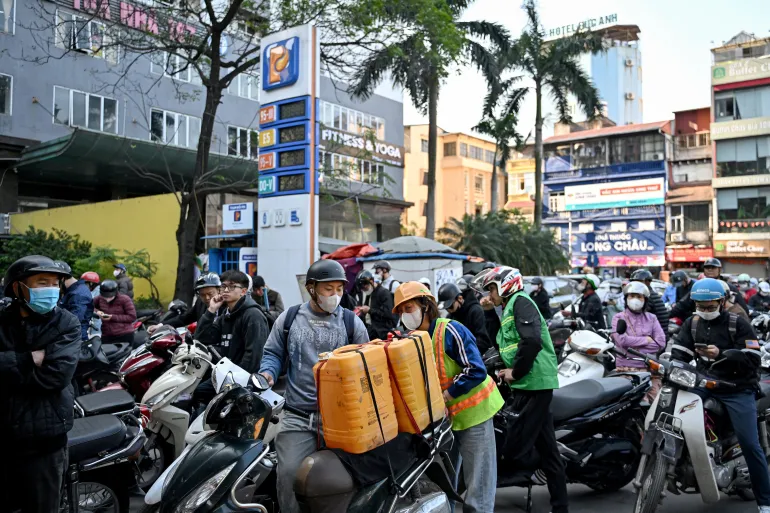
The Southeast Asia oil crisis is intensifying as governments scramble to respond to the disruption of global energy supplies. The shutdown of the Strait of Hormuz amid the US-Israel conflict with Iran has sent shockwaves through Asian energy markets, forcing countries across Southeast Asia to introduce emergency measures to manage fuel shortages.
Many economies in the region rely heavily on imported oil and gas. As supply disruptions spread thousands of kilometres from the Middle East, governments and businesses are now taking steps to conserve energy and stabilize fuel prices.
Southeast Asia Oil Crisis Triggers Emergency Measures
The Southeast Asia oil crisis has prompted several governments to adjust work schedules and restrict travel to reduce fuel consumption.
In the Philippines, government offices have shifted to a four-day work week in order to lower energy use. Meanwhile, authorities in Thailand and Vietnam have encouraged employees to work from home and avoid unnecessary travel.
Myanmar has introduced an unusual traffic rule where drivers must follow alternating driving days. The policy aims to limit fuel demand while authorities monitor supply conditions.
Economists say these actions show how quickly the region is responding to the energy shock.
Southeast Asia Oil Crisis Forces Fuel Price Controls
Governments are also intervening directly in fuel markets as part of their response to the Southeast Asia oil crisis.
Thailand has introduced a temporary price cap on diesel fuel to protect consumers from sudden price spikes. Vietnam has begun using its fuel price stabilisation fund to keep costs under control.
Officials say these steps are necessary because oil supplies passing through the Strait of Hormuz remain blocked, causing supply disruptions and rising prices.
Energy analysts warn that these measures may only provide temporary relief if the shipping route remains closed.
Southeast Asia Oil Crisis Exposes Dependence on Imports
The Southeast Asia oil crisis highlights how dependent the region is on imported fuel. Although Southeast Asia has fossil fuel resources, many countries still rely heavily on external energy supplies.
A large share of those imports normally passes through the Strait of Hormuz. Data from the US Energy Information Administration shows that about 84 percent of crude oil and 83 percent of liquefied natural gas shipped through the strait in 2024 went to Asia.
China, India, Japan and South Korea accounted for nearly 70 percent of those shipments. Another 15 percent went to other Asian economies, including Southeast Asia.
Countries such as the Philippines, Thailand, Malaysia and Brunei are particularly vulnerable because they import between 60 percent and 95 percent of their crude oil needs.
Southeast Asia Oil Crisis Drains Limited Fuel Reserves
The Southeast Asia oil crisis is also placing pressure on the region’s limited energy reserves. Many countries maintain relatively small stockpiles compared with major energy consumers in Northeast Asia.
Vietnam has begun searching for alternative suppliers outside the Middle East. Authorities plan to purchase around four million barrels of crude oil from other regions.
However, energy analysts say that amount would cover only about six days of Vietnam’s consumption.
Indonesia holds fuel reserves that could last roughly 21 to 23 days. Thailand has about 65 days of supply and is seeking to increase reserves by another 30 days.
The Philippines has around 50 to 60 days of reserves, but much of that fuel remains in privately owned commercial storage rather than government stockpiles.
Southeast Asia Oil Crisis Disrupts Regional Industry
The Asia oil crisis is already affecting industries that depend heavily on petroleum products.
Several petrochemical companies have declared force majeure because they cannot secure key raw materials. Singapore-based Aster Chemicals and Energy and Indonesia’s PT Chandra Asri Pacific are among the firms warning that supply disruptions could affect production.
Thailand’s Rayong Olefins plant has also suspended operations after failing to obtain crucial inputs such as naphtha and propane.
Energy shortages could place additional pressure on countries like Laos, Cambodia and Myanmar, which lack strong refining capacity and depend on refined fuel imports from neighbouring nations.
Southeast Asia Oil Crisis Could Threaten Economic Growth
Economists warn that the Asia oil crisis could have long-term economic consequences if supply disruptions continue.
Higher oil and gas prices may push inflation higher across the region. At the same time, rising energy costs could slow economic growth.
The Economist Intelligence Unit expects global oil prices to average around $80 per barrel during the year. Combined with rising natural gas prices, that trend could weaken economic performance across Asia.
Analysts say the region could even face recession risks if the Strait of Hormuz remains closed for an extended period.
For now, governments across Southeast Asia continue searching for alternative supplies while implementing emergency measures to protect their economies.