
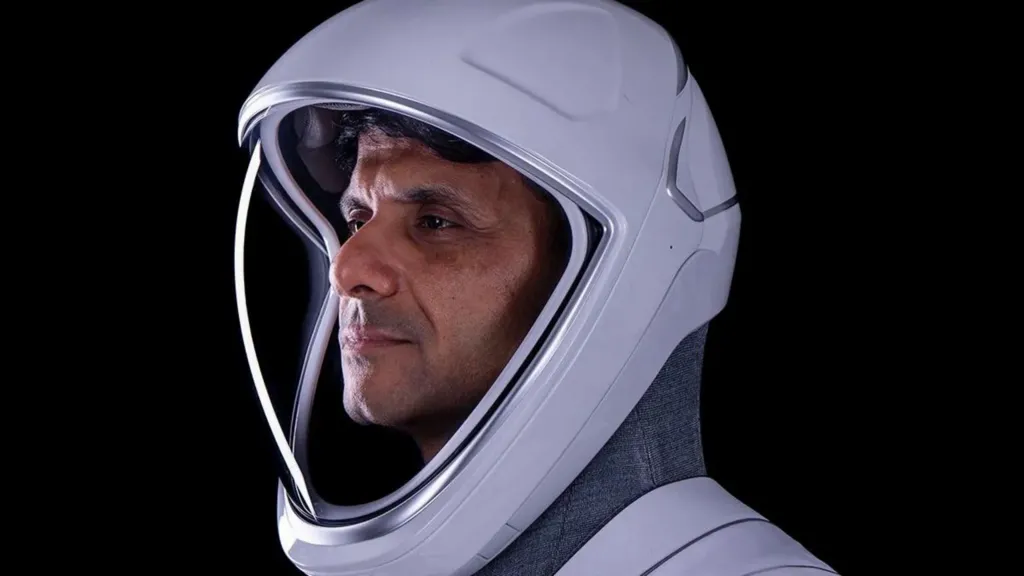
Shubhanshu Shukla reaches space on the Axiom-4 mission, becoming the second Indian to do so in over four decades. The spacecraft launched from NASA’s Kennedy Space Center in Florida at 02:31 EDT on Wednesday. It is scheduled to dock with the International Space Station (ISS) by Thursday afternoon.
Axiom-4 carries an international crew led by former NASA astronaut Peggy Whitson. Alongside her are Slawosz Uznanski-Wisniewski from Poland, Tibor Kapu from Hungary, and India’s Group Captain Shukla. The team will remain aboard the ISS for two weeks, where they will conduct over 60 scientific experiments. Seven of these are designed by the Indian Space Research Organisation (ISRO).
The mission has ignited excitement across India. Notably, it comes 41 years after Rakesh Sharma flew to space aboard a Soviet Soyuz spacecraft. Shukla’s journey represents not just national pride but also a strategic step in India’s evolving space ambitions.
ISRO collaborated with Axiom Space, NASA, ESA, and SpaceX for this mission. It spent 5 billion rupees (about $59 million) to secure Shukla’s training and seat. According to officials, his in-orbit experience will directly support India’s planned crewed spaceflight in 2027. Additionally, it aligns with long-term goals like building a space station by 2035 and sending an astronaut to the Moon by 2040.
On Thursday morning, Axiom Space aired a live feed from the spacecraft. Group Captain Shukla appeared cheerful as he described his first 24 hours in orbit. “What a ride!” he exclaimed. “It feels amazing to float freely in space.” He added with a laugh, “I’ve been told I’m sleeping a lot up here, which apparently is a good sign.”
Although Shukla admitted he felt uneasy right after launch, he has since adapted. He’s learning to eat, move, and read in zero gravity. “It’s like being a baby again,” he said, smiling. Clearly, the experience is both challenging and exhilarating.
As the astronauts spoke, a small white toy swan floated gently past them. This plush mascot, named Joy, serves as the crew’s zero-gravity indicator. Shukla explained that Joy symbolizes wisdom and focus—qualities that matter in a world full of distractions.
Commander Peggy Whitson also spoke during the live session. She revealed that the crew had named their spacecraft “Grace.” For her, the name reflects the harmony between science and spirit. “It’s not just a name,” she said. “Grace reminds us that spaceflight blends engineering excellence with human goodwill.”
The mission highlights more than personal achievement. It underscores how India is stepping forward as a serious player in global space exploration. Moreover, it represents a bridge between nations working together in orbit for the betterment of life on Earth.
This historic milestone also demonstrates ISRO’s readiness for future challenges. Sending Shukla into space helps India build the skills and insights needed for its human space program. With each mission, ISRO gains more confidence and capability.
Now that Shubhanshu Shukla reaches space, the door opens wider for Indian astronauts of the future. His story will likely inspire the next generation of scientists, engineers, and explorers. It’s a reminder that space belongs to those bold enough to reach for it—and prepared enough to arrive.