

The Houthis, formally known as Ansar Allah, have become one of the most consequential actors in the Middle East. What began in the rugged mountains of northern Yemen as a revivalist movement in the 1990s has transformed into a political and military force capable of shaping regional dynamics and disrupting global trade.
Their rise—from marginalized Zaydi Shia tribesmen in Saada to rulers of Yemen’s capital and disruptors of Red Sea shipping lanes—illustrates not just the trajectory of a rebel movement but the volatility of the modern Middle East. With Iran’s backing, a war against a Saudi-led coalition, and now direct clashes with Israel, the U.S., and the U.K., the Houthis are no longer just a Yemeni insurgency; they are a global disruptor.
Seeds of Rebellion
The Houthis’ origins trace back to the 1990s, when Hussein Badreddin al-Houthi, a charismatic cleric, sought to defend Zaydi Shia identity in northern Yemen. Zaydism, once central to Yemeni political life, had been sidelined by centuries of Sunni dominance and the spread of Saudi-backed Salafi influence.
To many in Saada, the rise of Salafi schools funded by Riyadh represented an existential threat. Hussein rallied followers with fiery rhetoric denouncing U.S. hegemony, Israeli policies, and Saudi interference. His slogans struck a chord with tribes who felt neglected by Yemen’s central government. The seeds of an armed resistance had been planted.
Six Wars in Saada
Open conflict erupted in 2004, when then-president Ali Abdullah Saleh sent forces against the group. Hussein al-Houthi was killed that year, but rather than extinguishing the movement, his death elevated him into a martyr.
Between 2004 and 2010, the Houthis fought six wars in Saada, facing devastating bombardment yet refusing to break. These conflicts forged a hardened guerrilla army, adept in mountain warfare, and expanded their tribal alliances. By the time the Arab Spring swept Yemen in 2011, the Houthis had evolved into more than rebels—they were an entrenched political-military movement with momentum.
The Arab Spring and the March on Sanaa
The 2011 uprising ousted Saleh and ushered in a fragile transition under Abdrabbuh Mansur Hadi. The power vacuum gave the Houthis a historic opportunity.
By September 2014, they shocked the world by seizing Sanaa, Yemen’s capital, aided by none other than Saleh’s loyalists—an extraordinary alliance with their former enemy. This power grab reshaped Yemen’s political map and thrust the Houthis from the periphery to the center of national politics.
Saudi Arabia Strikes Back
The fall of Sanaa triggered alarm across the Gulf. In March 2015, Saudi Arabia, backed by the UAE and U.S. support, launched a massive air campaign to restore Hadi’s government. Riyadh expected a swift victory. Instead, they faced a protracted war.
With Iran’s growing assistance, the Houthis proved far more resilient than expected. They mastered attrition warfare, held their ground in the north, and even turned on Saleh himself, killing him in 2017 when their alliance collapsed.
The human cost was catastrophic:
- Millions displaced,
- Famine conditions affecting entire provinces,
- Cholera outbreaks described by the U.N. as the worst in modern history.
Despite immense suffering, the Houthis survived—emerging stronger politically and militarily.
Expanding the Battlefield
By the late 2010s, the Houthis shifted tactics beyond Yemen’s borders. They unveiled long-range missiles and drones, striking deep into Saudi Arabia—most notably the 2019 Abqaiq oil facility attack, which temporarily crippled global oil supply.
The group also targeted the UAE, signaling that their reach was no longer confined to Yemen. By 2022, the war had hardened into a stalemate: Saudi-backed forces held parts of the south, while the Houthis consolidated power in the north, ruling millions from Sanaa.
A New Front: The Red Sea
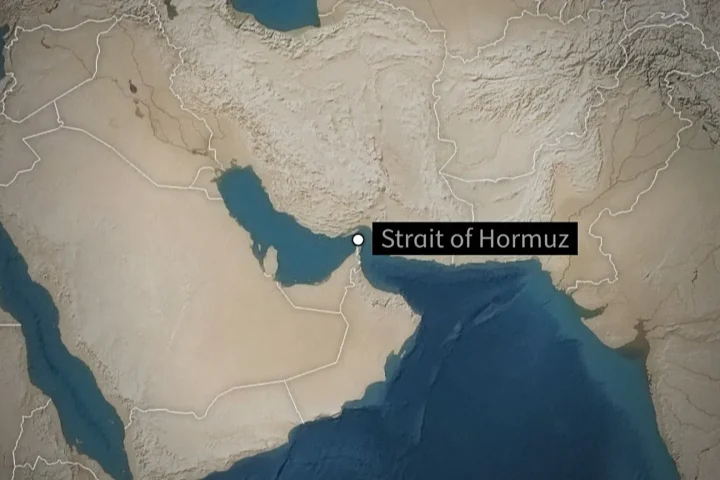
The conflict escalated again in late 2023, after the war in Gaza reignited regional tensions. Casting themselves as part of Iran’s “Axis of Resistance,” the Houthis began targeting international shipping in the Red Sea, claiming solidarity with Palestinians.
Initially symbolic, these strikes quickly snowballed into a global crisis:
- Shipping giants diverted vessels around the Cape of Good Hope, adding weeks and costs to journeys.
- Oil and food prices spiked worldwide.
- The U.S. and U.K. launched retaliatory airstrikes on Yemen in early 2024.
The Houthis, however, absorbed the blows and continued attacks, proving themselves one of the most battle-hardened militias in the region.
2025: A Movement at a Crossroads
By mid-2025, the Houthis are entrenched rulers of northern Yemen, administering courts, collecting taxes, and fielding a formidable military force. Their reach now extends into global affairs, with the ability to disrupt energy flows and trade routes.
But new risks are emerging. On 30 August 2025, Israel launched a major airstrike in Sanaa, killing the Houthi prime minister and senior officials. This marked one of the deadliest blows to their leadership since the war began and signaled that the Houthis’ defiance now carries direct consequences from powerful states beyond the Gulf.
The Houthis face multiple futures:
- Consolidation of Power — entrenching as Yemen’s de facto rulers, pursuing negotiations with Saudi Arabia and possibly the U.N. for international legitimacy.
- Regional Expansion — becoming a Hezbollah-style proxy for Iran, shaping Red Sea security and Gulf politics.
- Escalation — continued attacks drawing heavier Western and Israeli retaliation, risking wider regional war.
At the same time, internal pressures—economic collapse, famine, corruption, and discontent under Houthi rule—could erode their support base even as they challenge global powers.
A Global Disruptor, Born of Local Struggles
The Houthis’ transformation is extraordinary. From a small religious revivalist group chanting anti-Saudi slogans in Yemen’s mountains, they have become global disruptors, capable of influencing shipping costs in Europe, oil prices in Asia, and security calculations in Washington, Riyadh, and Tel Aviv.
Their rise underscores a stark reality of modern conflict: even localized insurgencies, if resilient and well-supported, can redraw international politics.
As of 2025, the world is no longer asking whether the Houthis matter. The urgent question is how far they will go—and whether anyone can stop them.