
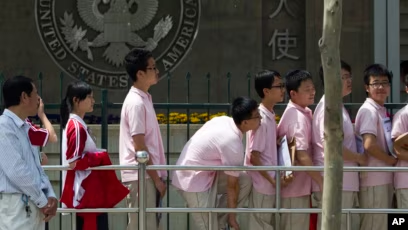
Chinese Students Face Uncertainty as US Tightens Visa Restrictions
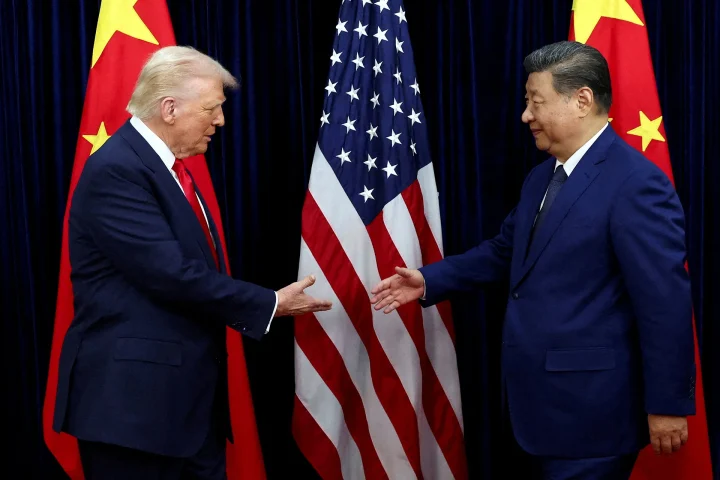
Thousands of Chinese students aiming to study in the United States are finding themselves caught in the middle of an escalating diplomatic and political clash between Washington and Beijing. Recent moves by the Trump administration have reignited scrutiny over student visas, particularly for those pursuing studies in sensitive scientific fields or who are linked—whether directly or indirectly—to the Chinese Communist Party (CCP).
One such student, 22-year-old Xiao Chen, had her visa application rejected just hours after the U.S. announced it would “aggressively” revoke visas of Chinese nationals. Despite being accepted into a communications program at a university in Michigan, her dreams were abruptly cut short.
“I feel like a drifting duckweed tossed in the wind,” she said, describing her confusion and helplessness.
A Chilling Shift in Policy
The crackdown intensified after Homeland Security Secretary Kristi Noem accused Harvard University of collaborating with the CCP, while Secretary of State Marco Rubio suggested students with party ties or working in “critical” sectors would be barred.
That includes 280,000+ Chinese students already in or applying to U.S. universities. Party membership is not uncommon in China, often including scholars, business leaders, and creatives, blurring the line between normal affiliation and perceived national security risk.
Suspicion Over Science Students
Science and tech scholars have been hit hardest. Mr. Cao, a psychology graduate specializing in neuroscience, applied to over 10 top U.S. PhD programs. Only one responded—with a rejection. He was told point-blank by a professor:
“We rarely give offers to Chinese students these days.”
Students with military-affiliated academic backgrounds are facing even more obstacles. One unnamed researcher accepted into a Harvard postdoc for cancer studies had his visa canceled by U.S. Customs and Border Protection upon landing in Boston.
“They asked how breast cancer could be tied to China’s defense. I had no answer,” he said.
Degrees Devalued Back Home
Even those who earn U.S. degrees are discovering limited job prospects back in China. Chen Jian, a U.S. graduate, was rejected from a state-owned bank job because he lacked a local degree.
“No one said it directly, but it was clear: we weren’t welcome.”
Suspicion has grown even within Chinese corporations. Business leader Dong Mingzhu, CEO of Gree Electric, recently said her company would never hire foreign-educated Chinese, implying they could be spies. Her remarks, leaked from a closed-door meeting, sparked controversy online.
Changing Attitudes on Both Sides
The climate has shifted drastically. Where American campuses once welcomed China’s best and brightest, a cloud of distrust now hangs over many applicants. Meanwhile, many Chinese youths raised during the Olympics and globalism now face a country that frowns upon internationalism.
“When I was a kid, my mom would encourage me to talk to foreigners to practice English,” said Zhang Ni, a Columbia University graduate. “Now, companies see us as suspicious.”
A joke made by a friend before Zhang left for the U.S. now echoes loudly in hindsight:https://www.youtube.com/watch?v=EY1jkiRxR58
“Just don’t come back as a spy