
India on Alert as Weather Department Predicts Intense Heatwave This Summer
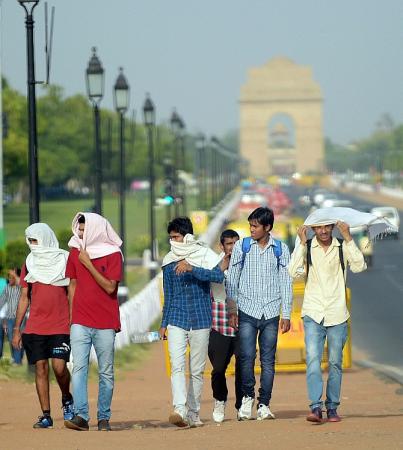
India is bracing for one of its hottest summers yet, as the country’s meteorological department warns of widespread heatwaves and higher-than-normal temperatures in the months ahead.
Speaking at a press conference on Monday, Mrutyunjay Mohapatra, Chief of the India Meteorological Department (IMD), said large swaths of the country—including the north, east, central regions, and northwestern plains—are expected to face a significant increase in heatwave days from April to June 2025.
“States like Uttar Pradesh, Jharkhand, Chhattisgarh, and Odisha could experience as many as 10 to 11 heatwave days,” Mohapatra stated. “This is two to four days more than usual in many areas.”
Temperatures have already been trending upward, with February seeing minimum temperatures 1°C to 3°C above average in several regions.
The warning follows last year’s extreme heat, when Churu in Rajasthan recorded a scorching 50.5°C—the highest temperature in the country. The health ministry officially recorded 143 heat-related deaths between March and June 2024, but independent watchdog Heat Watch 2024 reported as many as 733 heatstroke-related deaths across 17 states during the same period.
Experts have long cautioned that India—among the world’s most climate-vulnerable nations—must take more aggressive action against rising temperatures. The crisis affects not just public health but critical sectors like agriculture and water supply.
India remains the world’s third-largest emitter of greenhouse gases, with coal continuing to fuel much of its power needs. Mr Mohapatra previously warned that unchecked emissions from human activities, growing population, industrialization, and transportation were leading to an increase in atmospheric pollutants such as carbon monoxide, methane, and chloro-carbons.
“We are endangering not only ourselves but also our future generations,” he had cautioned.
As the summer approaches, experts urge both the public and policymakers to prepare for what could be a record-breaking season of heat, urging improved infrastructure, early warning systems, and awareness campaigns to prevent avoidable deaths.