

Trump’s Asia Tariffs Spark Trade War Fears as China Vows Retaliation
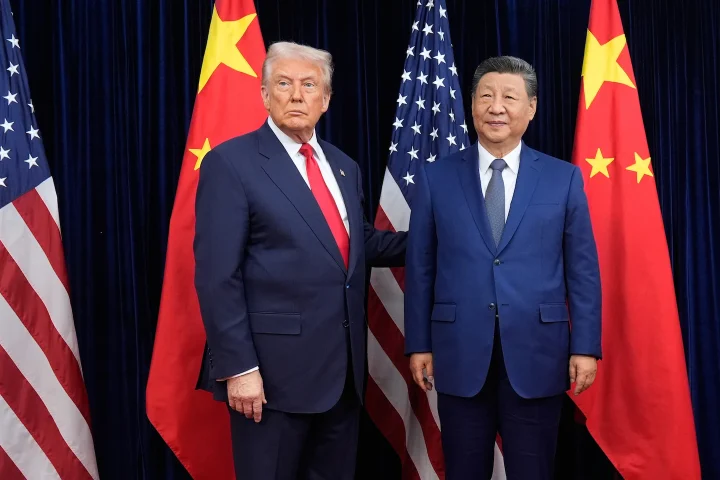
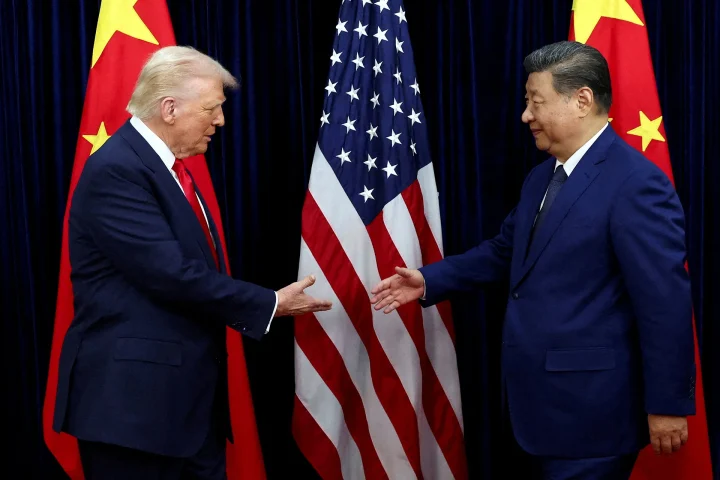
President Donald Trump has launched a sweeping new wave of tariffs on China and several Southeast Asian nations, triggering swift condemnation from Beijing and raising alarms over a potential global trade showdown.
Announced during a White House address, Trump defended the move as long overdue, accusing China of “taking tremendous advantage” of the US through high tariffs and unfair trade practices. Holding up a chart with tariff percentages, he highlighted China’s 67% rate and announced a new 34% reciprocal tariff, stating, “They charge us, we charge them—less. So how can anyone complain?”
China Hits Back
Beijing immediately slammed the move as “unilateral bullying.” China’s Commerce Ministry warned of “resolute countermeasures,” while state media criticized Trump for reducing complex trade relations to “a simplistic tit-for-tat game.”
The new tariffs are on top of existing 20% levies imposed on Chinese imports since Trump’s return to office in January. They are set to spike to 54% within days, hitting sectors like consumer electronics, textiles, and e-commerce.
Adding fuel to the fire, Trump also signed an executive order ending tax exemptions for low-value parcels from China—a change that directly affects major Chinese online retailers like Shein and Temu. These companies had previously been allowed to ship items under $800 into the US without duties, but that loophole is now closed.
Southeast Asia Caught in the Crossfire
In what experts call a calculated strategy to disrupt China’s extended supply chain, Trump also slapped 46–49% tariffs on Vietnam, Laos, and Cambodia. These nations had become vital production hubs for Chinese firms trying to bypass previous tariffs by relocating manufacturing.
Stephen Innes from SPI Asset Management called it “a full-frontal assault on Beijing’s supply chain.” He warned that countries like Vietnam, which benefited from the 2018 US-China trade tensions, are now collateral damage.
Laos and Cambodia, already heavily reliant on Chinese investment, are expected to suffer immediate economic strain.
Fallout for US and Asia
The tariffs won’t only hit Asia. US companies that manufacture goods in Southeast Asia, such as Apple, Intel, and Nike, are bracing for impact. A recent survey by the American Chamber of Commerce in Vietnam revealed that most US firms there are considering layoffs due to rising costs.
“This isn’t just a China strategy—it’s a complete realignment of US trade policy,” said Deborah Elms of the Hinrich Foundation.
Former US trade negotiator Stephen Olson said the tariffs could be “prohibitive” for China. “They’ve now lost the backdoor they used during the last tariff wave,” he said.
What’s Next for China?
With only days before the new tariffs kick in, China faces tough decisions. Analysts expect a “forceful response,” possibly in the form of retaliatory tariffs and restrictions on American companies operating in China.
INSEAD professor Pushan Dutt warned that China must now “unleash domestic demand” and reduce its dependency on foreign exports to avoid long-term damage.
There are signs that China is already seeking new alliances. Recent trilateral economic talks with Japan and South Korea could pave the way for a long-discussed regional free trade agreement.
Is a Trade Deal on the Horizon?
Despite escalating tensions, some analysts believe both sides are maneuvering toward a broader negotiation.
“Ultimately, the US and China are heading for the table,” Olson said. “But it won’t happen soon—and it’s likely things will get worse before they get better.”
With economic stakes rising and regional dynamics shifting, Trump’s tariff offensive may mark the beginning of a new era in global trade—one defined by protectionism, strategic containment, and fierce economic rivalry.