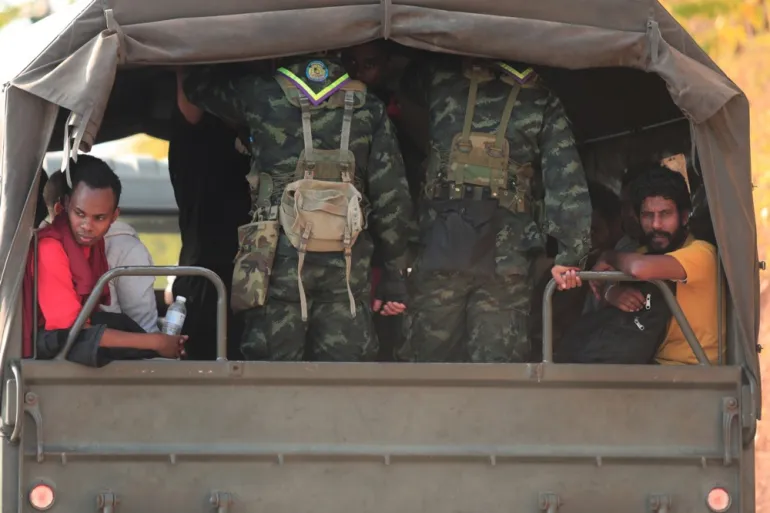


When they first received recruitment messages promising stable work, generous pay, and a chance to build a better future, many of these men saw an opportunity rather than a warning. They were migrant workers, stranded laborers, or vulnerable job seekers navigating difficult economic conditions in Africa, Central Asia, South Asia, and parts of the Middle East. Russia’s labor recruiters targeted them with offers that sounded straightforward: construction jobs, factory positions, and support roles far from the front lines. But once they arrived, many discovered the truth. They were not there to work. They had been funneled into Russia’s war machine and sent to fight in Ukraine.
For months, reports have surfaced describing how foreign workers—some undocumented, some recruited through legal channels—were pressured or deceived into joining Russia’s military ranks. Some were told their work visas required “patriotic duties.” Others claim their passports were seized. A few insist they never signed any military contract at all. Yet, somehow, they found themselves in uniforms, holding weapons, and deployed to active combat zones. What began as a search for economic stability quickly turned into a struggle for survival.
Job Promises Used as a Recruitment Tool
Russia’s demand for manpower has surged throughout the conflict, and officials have turned to aggressive recruitment strategies to fill the gaps. Many foreign nationals entered the country believing they had secured jobs in manufacturing, road repair, cleaning services, or seasonal agricultural work. Recruiters often presented contracts in Russian, leaving non-speakers unable to understand what they were signing. They were promised monthly earnings that far exceeded wages in their home countries. Some were offered expedited citizenship if they completed their “service period,” a powerful incentive for migrants hoping for better economic opportunities. But when transportation buses arrived, many realized they were being taken not to work sites but to military training camps. Several who protested said they were threatened with arrest, deportation, or indefinite detention. Under these pressures, many complied, forced into a system designed to exploit desperation.
Confiscated Passports and Disappearing Freedom
A troubling pattern has emerged in testimonies from survivors and escapees. Many describe having their passports taken immediately upon arrival at “processing centers.” Without documentation, leaving became nearly impossible. Some workers also claim they were moved between facilities without explanation, often at night, and constantly guarded. Those who resisted faced intimidation by security officers or were told they would be labeled as “extremists,” a charge that carries severe consequences in Russia. For undocumented migrants already living in fear of law enforcement, the threat alone was enough to silence them. Only when they reached the outskirts of military bases did the truth become unavoidable. Instead of being placed in civilian jobs, they were issued uniforms and weapons and told they would “support Russia’s special military operation.” By then, escape was no longer an option.
Training That Lasted Only Days
Many of the conscripted workers had never fired a weapon before. They came from professions far removed from war—construction, farming, hospitality, transport, and domestic work. Despite their lack of military experience, they were given minimal training. Survivors say some camps provided only two weeks of preparation. Others reported receiving no more than three days. The training focused primarily on basic handling of rifles, movement drills, and following commands. There was little instruction in battlefield tactics, first aid, or survival skills. When they entered the war zone, they were unprepared for the intensity of modern combat. Several accounts describe foreign recruits placed in the most dangerous positions, often used as front-line infantry to absorb enemy fire. Many never made it past their first deployment.
Families Searching for Answers
Families back home often had no idea what had happened until their loved ones stopped responding to messages. Some received calls from unknown numbers informing them that their relative had “died in service.” Others learned through social media videos posted by Russian military channels, which showcased foreign fighters as examples of loyalty. Many families rejected these narratives, insisting their loved ones were misled, coerced, or forced into combat against their will. Some bodies were returned months later, often without clear explanations. Others have not been returned at all, leaving families trapped in uncertainty. Several governments have begun investigating reports of forced recruitment and human trafficking, although diplomatic avenues remain limited, especially for countries with weaker political leverage.
Escape Stories Reveal the Harsh Reality
A small number of foreign recruits managed to escape. Their stories share striking similarities: exhaustion, fear, confusion, and a desperate desire to survive. Some slipped away during chaotic battlefield movements. Others escaped during transport between bases. Many sought asylum in neighboring countries after crossing borders on foot. Their testimonies paint a grim picture—lack of proper equipment, insufficient food, and extremely high casualty rates among untrained units. They described commanders who treated foreign fighters as expendable assets rather than soldiers. For many escapees, the experience was nothing short of a nightmare. They left home seeking employment and stability but instead found themselves trapped in a violent conflict they never chose.
Russia’s Denials and Political Silence
Russian officials deny accusations of forced recruitment, claiming all foreign fighters joined voluntarily. They argue that combat service offers lucrative pay and pathways to citizenship. However, this narrative contradicts dozens of testimonies and the growing number of human rights reports documenting coercion, deception, and exploitation. Many foreign governments have remained cautious, wary of direct confrontation with Moscow. Others have issued warnings advising citizens not to travel to Russia for work under any circumstances. Yet for some, desperation continues to push them toward risky opportunities, making them vulnerable to the same recruitment traps.
A Conflict Fueled by Economic Vulnerability
The tragedy at the heart of these stories is the exploitation of poverty. Most victims boarded flights believing they were about to start legitimate jobs. Many came from regions where employment is scarce, wages are low, and foreign recruitment appears to offer a lifeline. This economic desperation made them easy targets for a system that blends labor migration with military substitution. Instead of opportunity, they encountered violence, fear, and a war they never intended to fight. Their experiences reflect a brutal reality: the conflict’s reach extends far beyond Russia and Ukraine, pulling vulnerable workers from across the world into its orbit.
The Human Cost Continues to Grow
Today, families, human rights groups, and international organizations continue to seek transparency and justice. They call for stronger protections for migrant workers, more oversight of foreign recruitment pipelines, and accountability for the exploitation of vulnerable populations. Yet the conflict stretches on, and with it, the risk that more people will fall into the same trap. For the men who survived, the experience remains a defining and traumatic chapter of their lives. For those who never returned, their stories stand as warnings about the dangers hidden behind promising job offers. And for the world, their fate serves as a stark reminder of how easily economic hope can be twisted into human suffering when war enters the equation.