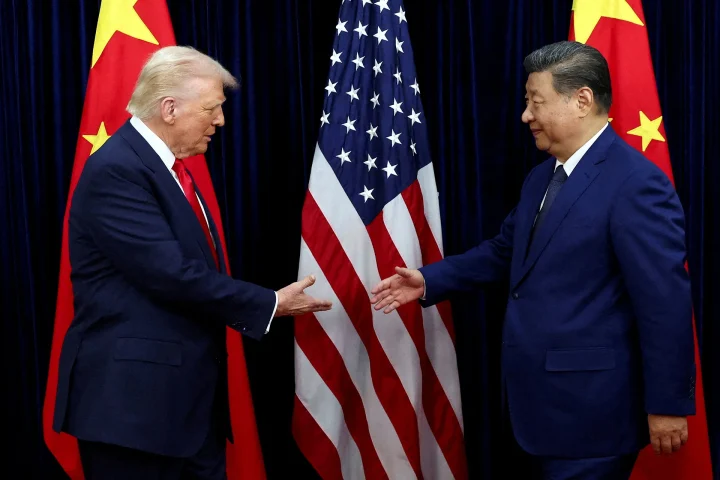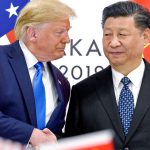


As U.S. President Donald Trump escalates his global trade offensive, India has landed in his sights over one surprising crop—corn. Despite America’s push, New Delhi has made it clear: it’s not ready to open its farm gates to U.S. corn or other “big-ticket” agricultural exports anytime soon.
At the heart of the clash is Trump’s demand to reduce the U.S. trade deficit with India—currently around $45 billion—and boost access for American farmers. But India’s fierce protection of its farm sector has long been a sticking point in trade talks.
A History of Food Sovereignty
India’s refusal to import U.S. corn is rooted in history. Once reliant on food aid, the country transformed into a food powerhouse after the Green Revolution. Today, it not only feeds 1.4 billion people but also ranks among the world’s top agricultural exporters.
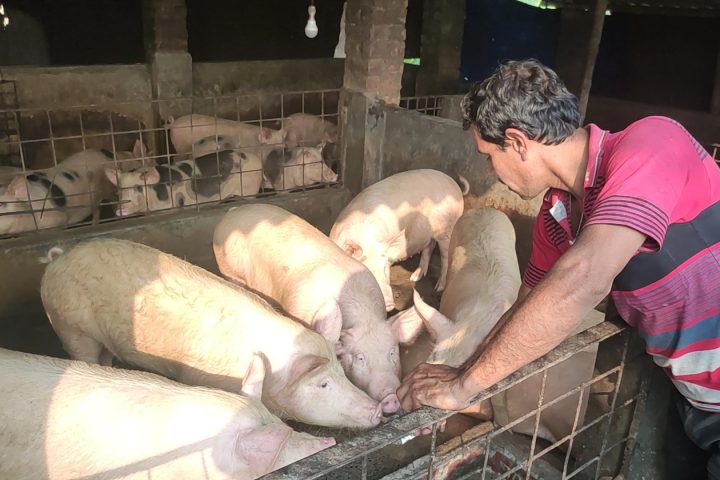
Despite this progress, the sector remains fragile. Most Indian farmers cultivate plots smaller than a hectare, compared to over 46 hectares in the U.S. As a result, India enforces high import tariffs—up to 150% on some agricultural goods—to shield smallholders from price shocks and foreign competition.
Commerce Secretary Howard Lutnick recently criticized India’s trade policies, questioning why it won’t buy “even a single bushel” of U.S. corn. But experts say Washington is ignoring the glaring imbalance between U.S. agribusiness and Indian subsistence farming.
An Uneven Playing Field
“The U.S. wants to export corn, cotton, and GM crops. But their system is subsidized and mechanized—ours is subsistence and survival-based,” says Abhijit Das, former head of the Centre for WTO Studies.
Indeed, the U.S. government heavily subsidizes its farmers, sometimes exceeding production costs. That creates a price advantage Indian farmers simply can’t compete with. Ajay Srivastava of the Global Trade Research Initiative warns that opening India’s market to such imports would “devastate rural livelihoods and threaten food security.”
India’s average tariff on U.S. farm products stands at 37.7%, while U.S. duties on Indian farm exports are about 5.3%, highlighting a deep policy divide.
Limited Bilateral Trade
Agricultural trade between the two nations remains modest—around $8 billion annually. India mostly exports rice, shrimp, honey, and black pepper, while the U.S. sends almonds, apples, and lentils. But the Trump administration now wants to expand that portfolio with bulk staples like corn and wheat.
However, India’s concerns go beyond trade. The agricultural sector employs nearly half the country’s population yet contributes just 15% to GDP. With limited jobs in other sectors, farming remains a safety net.
Domestic Pressures and Protests
Internally, India is grappling with its own agricultural crisis. Protests over minimum crop prices and guaranteed support for farmers have rocked the country in recent years. “Even surplus-producing farmers don’t see a future,” says Biswajit Dhar of the Council for Social Development. “That shows how deep-rooted the crisis is.”
Analysts argue that India should modernize its agricultural infrastructure—invest in irrigation, cold chains, and productivity—before exposing it to global competition. Until then, defending high tariffs may be the only shield small farmers have.
A Delicate Balancing Act
As both countries continue trade negotiations, experts warn that India must tread carefully.
“India shouldn’t yield to U.S. pressure at the cost of food sovereignty and rural livelihoods,” Srivastava notes. “There’s room for trade deals—but not at the expense of national interest.”
Instead, analysts suggest offering alternative trade-offs—such as reducing tariffs on industrial goods—to keep talks alive without risking its agricultural foundation.
In the end, India’s position reflects a larger question: Should free trade come before food security?
As Trump turns up the heat, India may play the long game—protecting its farmers today to invest in a stronger, more competitive tomorrow.