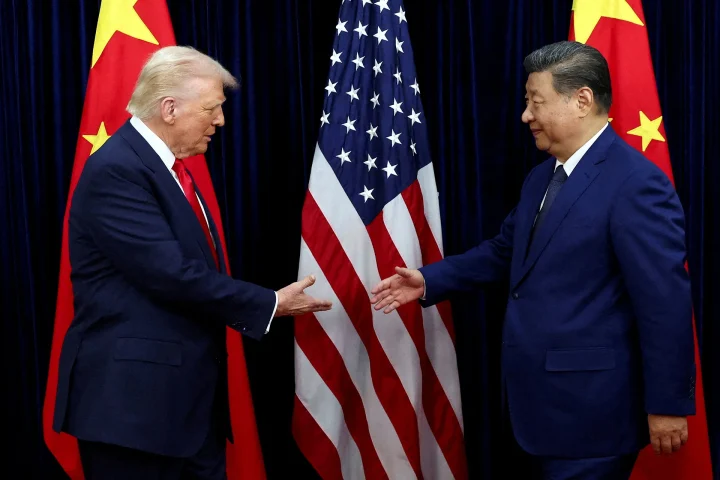

The US-Japan military alliance remains strong after Defense Secretary Pete Hegseth’s recent Iwo Jima anniversary visit. However, economic ties now face significant challenges. President Donald Trump has announced new 25% tariffs on imported cars, including those from Japan.
Japanese officials view this move as both an economic threat and a broken promise. During his first term, Trump told then-Prime Minister Shinzo Abe he wouldn’t impose these tariffs on Japanese vehicles.
As a result, Japan’s response has been direct. Chief Cabinet Secretary Yoshimasa Hayashi urgently urged the US to exempt Japan. He warned about potential damage to bilateral economic relations and global trade. Meanwhile, Prime Minister Shigeru Ishiba told Diet members Japan is ready with “all possible options.” These likely include WTO complaints or counter-tariffs.
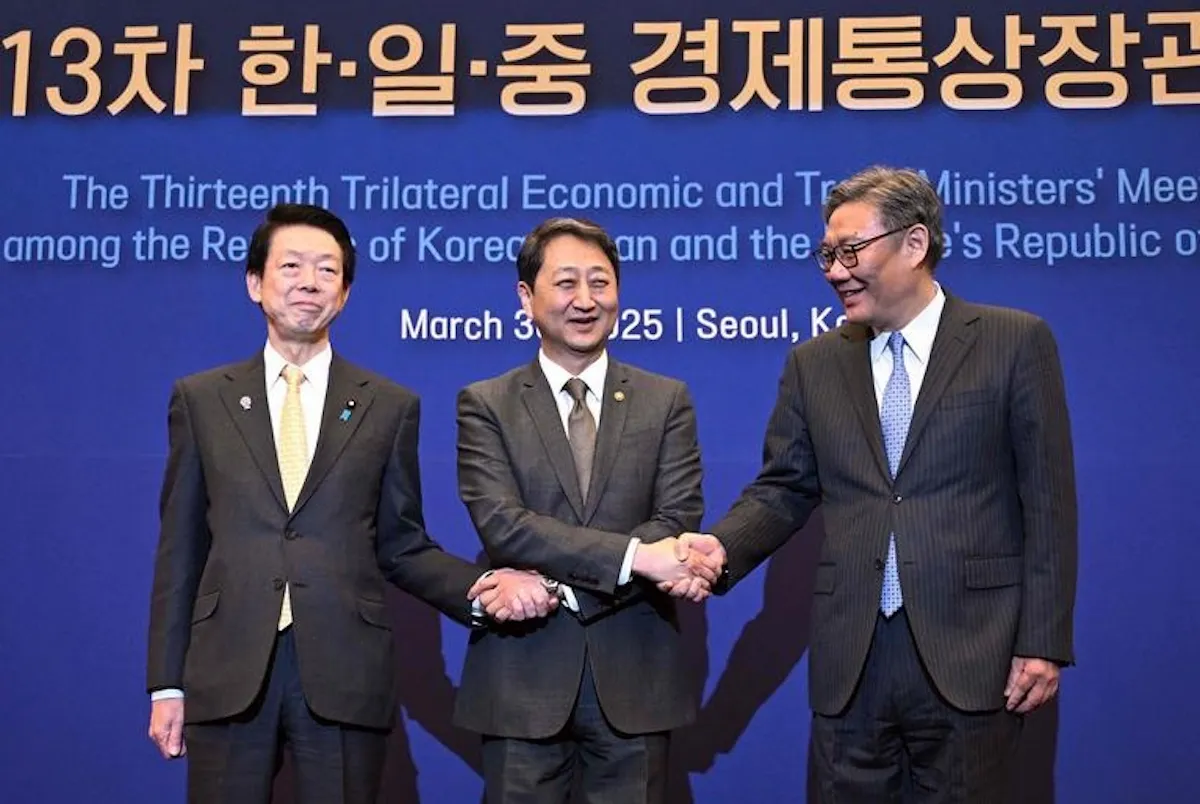
Consequently, Japan has now begun exploring new economic partnerships. In a key development, Japan, South Korea, and China recently held their first economic talks in five years. These discussions specifically aimed to boost regional trade as Trump raises tariffs. Furthermore, trade ministers from all three countries agreed to strengthen the Regional Comprehensive Economic Partnership (RCEP) and advance their stalled free trade agreement.
This economic meeting built on a March gathering of foreign ministers in Tokyo. During this meeting, Japanese Foreign Minister Takeshi Iwaya called the current global situation “a turning point in history.” He therefore stressed the need for cooperation. Subsequently, Japanese media outlets across the political spectrum reported on this regional shift.
Although right-wing Japanese media remains cautious about China’s intentions, economic realities nevertheless push these historical rivals toward practical cooperation. In fact, Chinese Foreign Minister Wang Yi highlighted that China-Japan trade has grown 300-fold since diplomatic relations began. Moreover, it has maintained around $300 billion annually for 15 straight years.
Additionally, Japan looks beyond East Asia to diversify its economic ties. Prime Minister Ishiba recently welcomed delegations from South Africa and Brazil. During Brazilian President Lula da Silva’s visit with 80 business executives, both leaders expressed interest in a new trade deal. As a result, the visit produced tangible outcomes. These included a sale of 20 Embraer jets to All Nippon Airways and furthermore initiated talks on agricultural trade and green technology.
In conclusion, these diplomatic moves clearly show Japan’s evolving strategy. While maintaining its US security alliance, Japan actively builds diverse economic partnerships worldwide to protect its trade interests and prosperity.