
South East Asia’s Economic Dilemma: Navigating Trump’s Tariffs and China’s Shadow
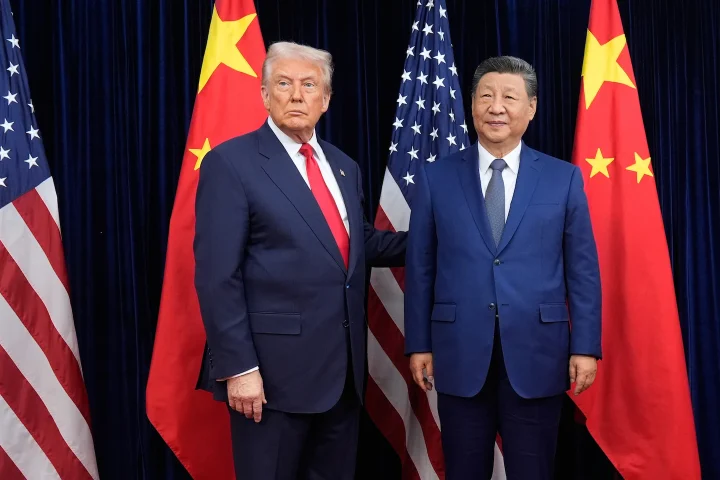
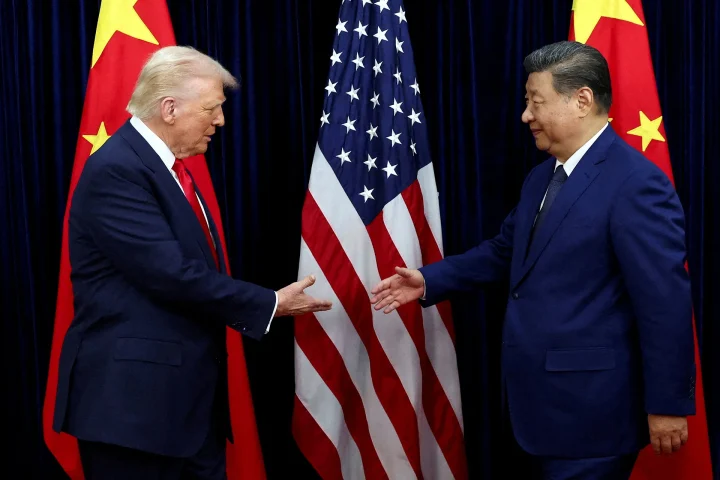
Southeast Asia once saw hope in the U.S.-China trade war, with local businesses stepping up to replace restricted Chinese exports. But now, Donald Trump’s renewed tariff threats may leave the region trapped between two superpowers—China, their largest trading partner, and the U.S., their biggest export destination.
Vietnamese entrepreneur Hao Le exemplifies this tension. His electronics company, which exports millions to the U.S., faces an uncertain future if Trump follows through on proposed 46% tariffs on Vietnamese goods. “It would destroy our business,” Le says. Competing at home is no better—Chinese imports dominate even local markets.
From Opportunity to Obstacle
Trump’s earlier tariffs on China rerouted low-cost exports into Southeast Asian markets, hurting local manufacturers but offering an opening to join global supply chains. Now, with tariffs looming over countries like Vietnam (46%), Malaysia (24%), and Cambodia (49%), those doors may slam shut.
This policy shift could derail Vietnam’s growing electronics sector and disrupt Malaysia’s chip exports, some of which are used in U.S.-bound Chinese products like iPhones. Indonesia, eyeing dominance in EV supply chains, could be blocked by a 32% tariff despite vast nickel reserves.
Diplomatic Tightrope: Xi Jinping’s Southeast Asia Tour
As Trump targets regional economies, China’s President Xi Jinping is on a charm offensive. His recent visits to Vietnam, Malaysia, and Cambodia emphasized Belt and Road investments—railways, ports, and dams—while urging resistance to U.S. “bullying.”
Still, Southeast Asian leaders are wary of picking sides.
“We can’t and won’t choose between China and the U.S.,” said Malaysia’s Trade Minister Tengku Zafrul Aziz.
Instead, countries like Vietnam and Thailand are scrambling to cut deals with Washington, hoping to soften or escape Trump’s tariffs altogether.
Cheap Chinese Goods Flood the Region
As Chinese exports lose access to the U.S., ultra-low-cost goods are swamping Southeast Asia, devastating local industries.
In Indonesia, clothing entrepreneur Isma Savitri watches copycat Chinese sleepwear selling at half her price. Over 250,000 Indonesian textile workers have been laid off in two years. In Thailand, more than 100 factories close each month.
“Who can we complain to?” asks Mujiati, a former textile worker laid off in February. “There’s no one.”
Governments Strike Back with Protectionism
In response, Southeast Asian governments are imposing tariffs, trade barriers, and import checks:
- Vietnam slapped anti-dumping duties on Chinese steel.
- Indonesia considered 200% tariffs on Chinese goods.
- Thailand taxed low-cost imports under $45.
- Cambodia is facing backlash for serving as a trans-shipment hub for Chinese goods.
All this while still trying to maintain favor with China, whose economy funds large swaths of regional infrastructure.
The Global Supply Chain at Risk
Trump’s tariffs don’t just impact Asia—they ripple across the entire global supply chain. Malaysia’s Zafrul warns the world economy could suffer as foreign investors reconsider their commitments.
Rubber glove makers in Malaysia, the world’s largest producers, now face a baseline 10% tariff, with a potential increase to 24%. But compared to the 145% tariff on Chinese gloves, the region could still win more U.S. contracts despite the added costs.
“We’re not celebrating, but this may still work in our favor,” says Oon Kim Hung, president of the Malaysian Rubber Glove Manufacturers Association.
Rebalancing Act Ahead
This latest tariff escalation is a wake-up call for Southeast Asia. The region must now reconsider its dependence on China and vulnerability to U.S. politics. Xi’s visit aimed to reassure partners, but his challenge remains: how to avoid alienating the very countries he relies on for trade.
“China’s loss might just become Southeast Asia’s gain,” says economist Doris Liew.
But the gains will only materialize if Southeast Asian nations can navigate geopolitical rifts without being swallowed by them.