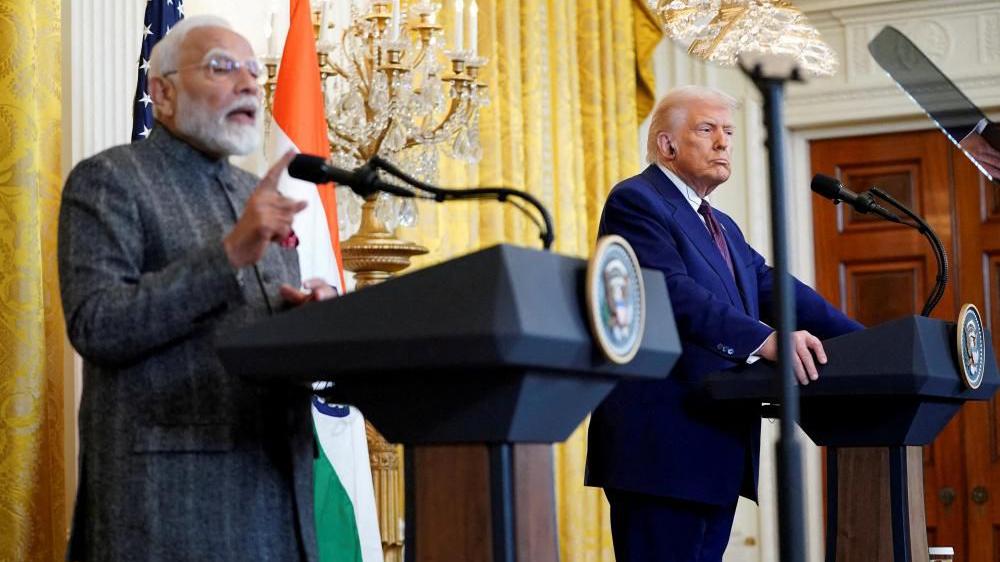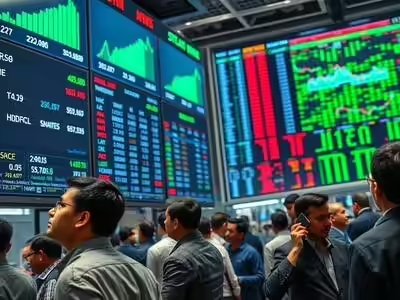


Donald Trump’s sweeping new tariffs have shaken global markets, but India’s response to Trump tariffs suggests resilience and potential upside. As markets from China to Japan tumbled, Indian equities showed remarkable stability. While Hong Kong’s Hang Seng fell 2.5%, Japan’s Nikkei dropped 3%, and Nasdaq futures sank 3%, India’s Sensex and Nifty dipped just 0.3% in early trade.
Why the calm? India now faces a 26% tariff—steep, but notably lower than China’s combined 54% rate (including an existing 20% plus a new 34%). Countries like Vietnam, Thailand, and Bangladesh have also been hit harder, giving India a comparative edge.
Crucially, some of India’s top export sectors have escaped damage. Pharmaceuticals, semiconductors, copper, lumber, gold, energy, and minerals remain untouched by the new tariffs—for now.
Venugopal Garre of Bernstein noted that India’s strengths remain largely intact. “The 26% tariff looks high, but critical exports like IT services and pharmaceuticals are unaffected,” he said. “Items like apparel and auto parts will see an impact, but India faces less competitive pressure since neighboring exporters are hit with even steeper tariffs.”
Garre believes India stands to gain from China’s misfortune. “With China now facing a 54% tariff, India is relatively well-positioned. It may even gain market share in categories where others are losing ground.”
Bernstein made key sectoral adjustments. The firm upgraded healthcare to equal-weight, citing its limited exposure to tariffs, while downgrading IT to equal-weight due to rising U.S. recession risks sparked by trade tension.
Indian Exports: A Quiet Winner?
Devarsh Vakil of HDFC Securities echoed similar optimism. He pointed out that Trump’s tariffs won’t broadly hurt domestic businesses but could create opportunities for exporters. India exported $9.6 billion in textiles and apparel to the U.S. in FY24—about 28% of its total exports in that category.
Meanwhile, China and Vietnam, which hold 21% and 19% market shares respectively, now face tariffs of 34% and 46%, compared to India’s 26%. “This tilt in duties makes Indian apparel more attractive,” said Vakil.
Moreover, pharma giants with major U.S. exposure—Aurobindo (48%), Zydus (47%), and Dr. Reddy’s (46%)—remain unaffected. Their strong positions offer a cushion to the broader market, especially if other sectors face headwinds.
ASSOCHAM President Sanjay Nayar added, “India’s export competitiveness in the U.S. market remains far less affected. That’s a big advantage in the current environment.”
The Cautionary Note: U.S. Recession Risks
Despite India’s relative advantage, risks remain. Rising trade friction could trigger a broader economic slowdown.
“Prolonged tariff fights and unpredictable U.S. policy will weigh on global investment,” warned Madhavi Arora, Lead Economist at Emkay Global. “If the U.S. tips into a trade-led recession, every economy—including India—will feel the pain. There will be no real winners.”
Navigating U.S. policy, avoiding Chinese retaliation, and protecting domestic growth are India’s next challenges. While the opportunity is real, so is the risk.
India’s response to Trump tariffs has been measured. The country avoided panic and may even benefit from its competitors’ misfortunes. But long-term success depends on smart diplomacy, strategic trade talks, and steady macroeconomic management.